How to Get Rid of Warts at Home: Dermatologist-Recommended Treatments
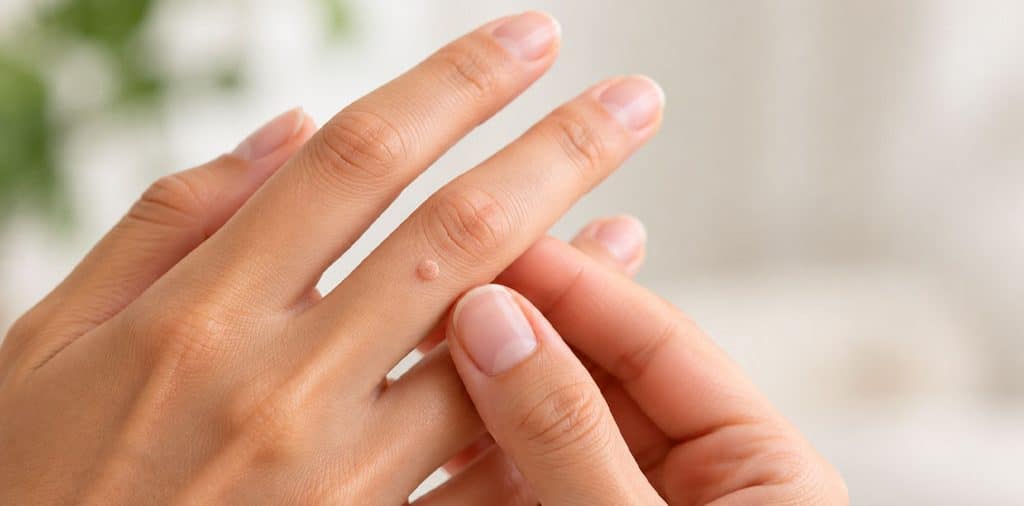
If you’ve noticed a wart on your hand, foot, or another part of your body, you may be wondering whether you can safely treat it at home. The good news is that many common warts respond well to at-home treatment, but successful wart removal takes patience and consistency.
At Smart Skin Dermatology, we often recommend at-home treatments as the first step for common warts. While no treatment works overnight, following the right approach can gradually remove the wart while helping reduce the risk of spreading the virus to other areas of your skin.
This guide explains the at-home wart treatments our providers commonly recommend—including Mediplast® (40% salicylic acid), duct tape therapy, and L-Methionine—along with when it’s time to schedule an appointment with a dermatologist.
Understanding Warts and At-Home Treatment
Warts are common, noncancerous skin growths caused by the human papillomavirus (HPV). The virus enters through tiny breaks in the skin, causing excess skin cells to grow and form the rough bumps we recognize as warts.
Common warts often develop on the hands and fingers, while plantar warts appear on the soles of the feet. Because HPV spreads through direct skin contact and contaminated surfaces, it’s possible for warts to spread to other parts of your body or to other people.
The good news is that many warts can be treated successfully at home. The key is choosing an appropriate treatment and following it consistently. Some warts begin improving within a few weeks, while others require several months of treatment. If you’re ever unsure whether a skin growth is actually a wart—or your wart is painful, bleeding, rapidly growing, or located on the face or genital area—it’s best to schedule an appointment before beginning treatment.
Choosing the Right Wart Treatment
Different treatments work in different ways. Some gradually remove wart tissue, while others support your body’s natural ability to clear the virus.
At Smart Skin Dermatology, the most commonly recommended at-home treatments include:
| Treatment | Best For | How It Works |
|---|---|---|
| Mediplast® (40% Salicylic Acid) | Common and plantar warts | Softens and gradually removes wart tissue. |
| Duct Tape Therapy | Common warts | Keeps the wart covered and may enhance other treatments. |
| L-Methionine | Children and adults | Oral supplement used as part of a comprehensive wart treatment plan. |
Your dermatologist may recommend one treatment or a combination of treatments depending on the size, location, and type of wart.
Mediplast® (40% Salicylic Acid)
For many common and plantar warts, Mediplast® (40% salicylic acid) is one of the first at-home treatments recommended by the providers at Smart Skin Dermatology. Store-brand 40% salicylic acid plasters or products like Wart Stick® may also be appropriate alternatives. Your dermatologist can recommend the option that’s best for you.
Salicylic acid works by gradually softening and breaking down the thick, dead skin that makes up the wart. With consistent treatment, the wart tissue slowly peels away, making it easier for healthy skin to replace it. Because this process takes time, it’s important to continue treatment even if you don’t see immediate results.
How to Use Mediplast®
For best results, follow these steps each evening:
- Soak the wart in warm water—or take a bath or shower—for about 10 minutes to soften the skin.
- Cut the 40% salicylic acid plaster so it covers only the wart.
- Apply the plaster directly over the wart and secure it with adhesive tape.
- Leave it on overnight.
- Remove both the tape and plaster the next morning.
- Repeat nightly for at least seven consecutive nights, with the last treatment the evening before your follow-up appointment.
After a few treatments, the wart and surrounding skin may begin to turn white. This is expected and means the medication is softening the dead skin. If instructed by your dermatologist, you may gently remove some of the softened skin with a pumice stone or callus file dedicated only to wart treatment. Stop if the area becomes painful or begins to bleed.
Successful treatment depends on consistency. Applying a fresh piece of Mediplast® every night and keeping your follow-up appointment gives your dermatologist the opportunity to evaluate your progress and determine whether additional treatment is needed.
Duct Tape Therapy
Duct tape therapy is another simple at-home treatment that may be recommended for common warts. While researchers continue to study exactly how it works, keeping the wart covered may help soften the thick outer layer of skin and encourage the body’s immune system to recognize and fight the human papillomavirus (HPV) that causes the wart.
At Smart Skin Dermatology, duct tape therapy is often recommended alongside other treatments, such as Mediplast®, rather than as a stand-alone treatment. Using the two together may improve your chances of success while keeping the treatment simple and inexpensive.
How to Use Duct Tape Therapy
- Cut a piece of duct tape slightly larger than the wart.
- Apply the tape directly over the wart.
- Leave it in place until it begins to loosen or falls off.
- Replace it with a fresh piece of duct tape as needed to keep the wart covered.
- Continue treatment as directed by your dermatologist.
Like other wart treatments, duct tape therapy requires patience. Some people notice improvement within a few weeks, while stubborn warts may take longer or require additional treatment.
Although studies have shown mixed results, many dermatologists continue to recommend duct tape therapy because it’s inexpensive, easy to use, and can be combined with other wart treatments as part of a comprehensive treatment plan.
L-Methionine
In addition to topical treatments, your dermatologist may recommend L-Methionine, an essential amino acid taken as an oral supplement. Unlike Mediplast® or duct tape therapy, L-Methionine isn’t applied directly to the wart. Instead, it’s used as part of a comprehensive treatment plan that may help your body resolve warts over time.
According to Smart Skin Dermatology’s clinical experience, L-Methionine has been used as a wart treatment for more than 20 years, with complete wart resolution reported in approximately 50–70% of patients. Results vary from person to person, with some patients improving within a few weeks while others may require up to 12 weeks of treatment.
How to Take L-Methionine
Always follow your dermatologist’s recommendations.
Children (up to 75 pounds):
- 1 teaspoon of the cherry-flavored liquid (5 mg/cc)
or - One 500 mg tablet daily
Adults:
- 500 mg twice daily
Your dermatologist may also recommend Vitamin A (5,000–10,000 IU once daily) as part of your treatment plan. Vitamin A should not be taken if you are pregnant or breastfeeding unless specifically directed by your healthcare provider.
Important Precautions
Although L-Methionine is considered safe for many patients, it isn’t appropriate for everyone.
Talk with your dermatologist before taking L-Methionine if you:
- Have liver disease
- Take L-Dopa for Parkinson’s disease
- Have questions about possible medication or supplement interactions
If you’re using L-Methionine, continue taking it exactly as directed and keep your follow-up appointments so your dermatologist can monitor your progress. If additional treatment is needed, it may be combined with therapies such as Mediplast® or duct tape therapy.
Tips for Successful Wart Treatment
Treating a wart at home requires consistency. No matter which treatment your dermatologist recommends, following the instructions carefully and sticking with your treatment plan gives you the best chance of success.
Keep these tips in mind:
- Be patient. Most warts take several weeks to improve, and some require up to 12 weeks of treatment.
- Don’t pick or cut the wart. This can delay healing and may spread the virus to nearby skin.
- Wash your hands after treating the wart. Warts are caused by the human papillomavirus (HPV) and can spread through direct contact.
- Don’t share personal items such as towels, pumice stones, nail clippers, socks, or shoes used around the wart.
- Keep your follow-up appointments. Your dermatologist can monitor your progress and recommend additional treatment if needed.
If your wart isn’t improving or you have concerns during treatment, don’t hesitate to contact your dermatologist.
When Should You See a Dermatologist?
Many common warts respond well to at-home treatment, but some require professional care.
Schedule an appointment if:
- Your wart is painful, bleeding, or shows signs of infection.
- The wart continues to grow or spreads despite treatment.
- Home treatment hasn’t improved the wart after several weeks.
- The wart is on your face, genitals, or under a fingernail or toenail.
- You have diabetes, poor circulation, or a condition that affects your immune system.
- You’re not sure whether the growth is actually a wart.
At Smart Skin Dermatology, we offer additional treatment options for stubborn or persistent warts. If at-home treatment isn’t working, our providers can recommend the next step based on your individual needs.
Frequently Asked Questions
How long does it take to get rid of a wart at home?
Most wart treatments require patience. Some warts begin improving within a few weeks, while others may take up to 12 weeks or longer, depending on the type of wart and the treatment being used. Consistency is one of the biggest factors in successful treatment.
Does duct tape really work for warts?
Research on duct tape therapy has produced mixed results, but some dermatologists continue to recommend it because it’s inexpensive, easy to use, and may be helpful when combined with other treatments such as Mediplast®.
What is L-Methionine?
L-Methionine is an essential amino acid taken as an oral supplement. At Smart Skin Dermatology, it may be recommended as part of a comprehensive wart treatment plan for both children and adults.
Is Verrulyse® the same as L-Methionine?
Verrulyse® is a product name associated with L-Methionine supplements. Smart Skin Dermatology’s wart treatment instructions refer to L-Methionine. If you have questions about which product to purchase, ask your dermatologist or pharmacist for guidance.
Are warts contagious?
Yes. Warts are caused by the human papillomavirus (HPV) and can spread through direct skin-to-skin contact or by sharing personal items. Keeping the wart covered and washing your hands after treatment can help reduce the risk of spreading the virus.
Download Smart Skin Dermatology’s Wart At-Home Treatment Guide
Whether you’re using Mediplast®, duct tape therapy, or L-Methionine, having clear instructions nearby can make treatment easier and help you stay consistent.
Download Smart Skin Dermatology’s Wart At-Home Treatment Guide for step-by-step treatment instructions, dosage recommendations, and important precautions.
If you have questions about your wart or you’re unsure whether it’s responding to treatment, contact Smart Skin Dermatology. Our providers are here to help you choose the most effective treatment plan and get you back to healthy skin.

Nicole Heaps is a board-certified Family Nurse Practitioner with over 15 years of medical experience, specializing in both medical and cosmetic dermatology. Her approach to skincare is rooted in a deep understanding of the connection between clinical health and personal confidence. Nicole is dedicated to helping her patients achieve their best skin through a blend of advanced medical treatments and evidence-based aesthetic procedures.