
Can Lipomas Go Away on Their Own
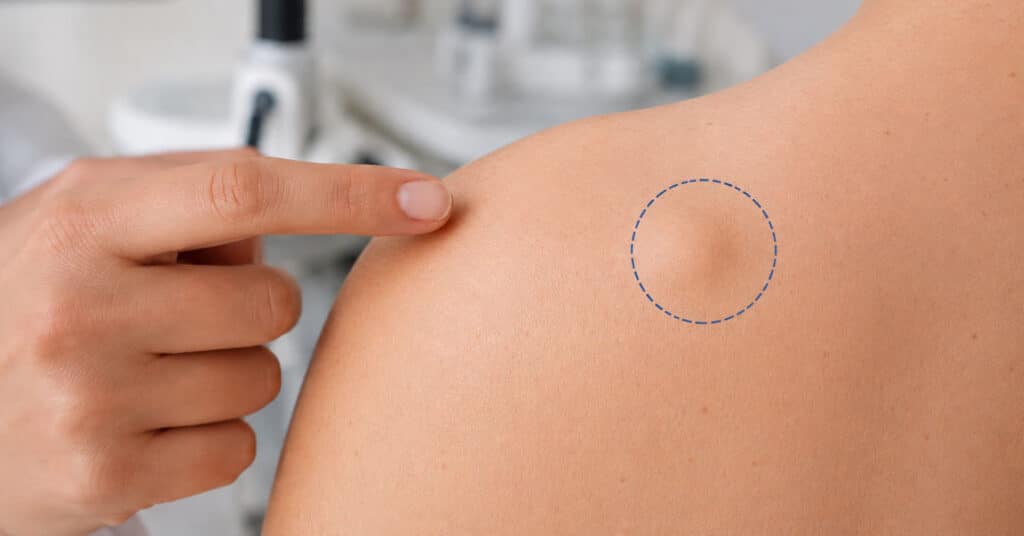
Discovering a soft, moveable lump under your skin can be concerning. If you’ve been diagnosed with a lipoma—or suspect you have one—you’re probably wondering whether it will simply disappear over time.
Quick Answer: Do Lipomas Ever Go Away by Themselves?
Lipomas almost never disappear on their own. These benign fatty tumors consist of mature fat cells enclosed in a thin capsule, which the body cannot simply reabsorb or break down naturally. Once a lipoma forms, it typically stays the same size or grows slowly over years unless medically removed.
Weight loss, exercise, diet changes, supplements, and “detox” plans will not make a lipoma disappear. At Smart Skin Dermatology, we typically recommend lipoma removal only when the growth is painful, growing rapidly, or bothersome cosmetically.
Any new or changing lump should be evaluated by a dermatologist to confirm it is truly a lipoma and not another type of skin growth.
What Is a Lipoma?
A lipoma is a slow growing lump of fatty tissue located between the skin’s surface and the underlying muscle layer. These benign growths feel soft or “doughy” and move easily under gentle finger pressure. Most lipomas are typically painless, though they can cause discomfort if they press on nearby nerves or joints.
Lipomas are very common, affecting approximately 1 in 1,000 adults. They frequently develop on the:
- Shoulders and neck
- Back and trunk
- Arms and thighs
Because lipomas are enclosed in fibrous tissue, the body cannot reabsorb the normal fat cells inside. Many healthy people live for decades with one or more lipomas without any medical problems—they are generally harmless.
Can a Lipoma Go Away on Its Own?
Spontaneous disappearance is extremely rare. Lipomas are considered persistent lesions because they consist of mature fat cells wrapped in a protective capsule that the body does not easily break down.
Some lipomas remain the same size for many years, while others grow slowly. However, “shrinking away” is not expected, and complete natural resolution is not something dermatologists see in routine practice.
The only reliable way to remove a lipoma is through a medical procedure performed by a trained professional.
Can Lipomas Go Away Naturally?
There is no scientific evidence that lipomas reliably disappear naturally without medical treatment. Home remedies such as herbal creams, essential oils, castor oil packs, or vigorous massage have not been proven to eliminate these fatty lumps.
Common “natural cure” claims may delay proper diagnosis and treatment. If a lump changes in size, shape, or feel, see a dermatologist rather than relying on online remedies.
Can Lipomas Go Away With Exercise?
Lipomas do not respond to exercise the way normal body fat does. Because they are encapsulated fatty growths, even regular exercise with cardio and strength training leaves the lipoma unchanged.
Patients often report stable lipomas despite significant fitness improvements. Exercise is excellent for overall health but should not be expected to make a lipoma go away.
Can Lipomas Go Away With Weight Loss?
Losing weight reduces overall body fat but typically does not change the size of a lipoma. These fatty tumors behave independently from normal fat stores and persist even after major weight loss.
Patients who lose 10–20 kg often still notice the same lipoma in the same location. In fact, weight loss can make a lipoma more noticeable because surrounding fat shrinks while the lipoma does not.
If Lipomas Don’t Go Away, Do They Always Need Treatment?
Most lipomas do not require treatment and can be safely observed over time. The decision to pursue treatment options is personal and based on:
- Cosmetic concerns – disliking the appearance
- Physical discomfort – catching on clothing or causing pressure
- Rapid growth – sudden changes warrant evaluation
- Location – areas that limit movement or daily activities
At Smart Skin Dermatology, we often monitor small, stable, asymptomatic lipomas with periodic skin checks rather than removing them immediately.
When to See a Dermatologist About a Lipoma
Any new or changing lump deserves professional evaluation. Schedule an appointment if you notice:
- Noticeable growth over months
- New pain or tenderness
- Restriction of movement
- Interference with daily activities
Warning signs that may suggest something other than a typical lipoma include a very firm or rock-hard lump, fixation to deeper tissue, irregular shape, or growing rapidly. Conditions like liposarcoma (a rare cancerous fatty tumor) can sometimes mimic lipomas—are lipomas cancerous? Almost never, but an expert diagnosis is essential.
How Dermatologists Diagnose Lipomas
Most lipomas can be diagnosed through medical history and physical examination alone. A dermatologist assesses the lump’s size, location, texture, mobility, and whether it causes tenderness.
For deeper or larger lipomas (>3 cm), an imaging test such as ultrasound may be ordered. MRI or CT scans help visualize complex masses near muscles, blood vessels, or nerves. If appearance is atypical, a biopsy with laboratory analysis may rule out other skin growths.
How Are Lipomas Treated If They Need to Be Removed?
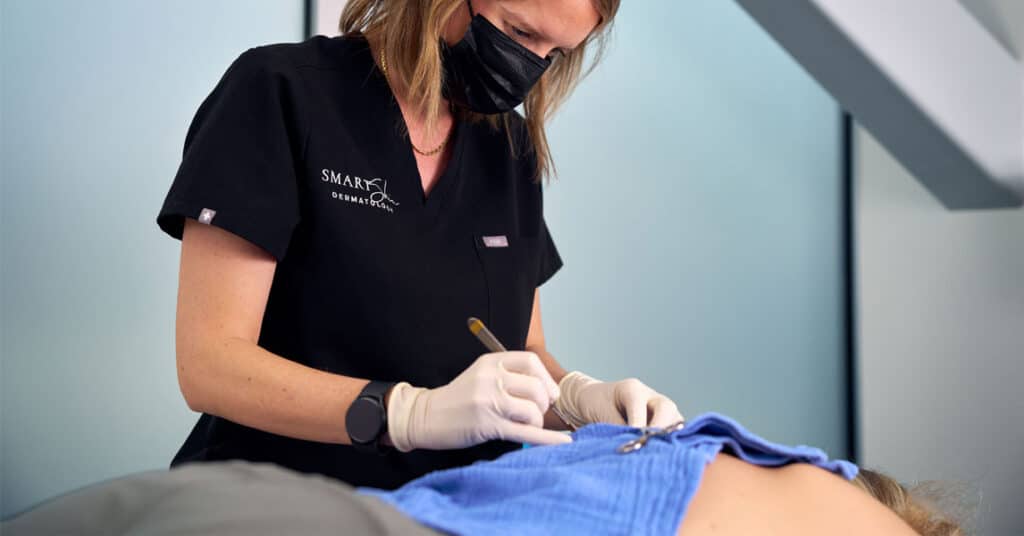
The most reliable treatment is complete surgical excision. This outpatient procedure is performed under local anesthesia, with the patient awake and comfortable.
During surgical removal, the dermatologist makes a small incision, gently frees the fatty lump from surrounding tissue, and removes it—including the capsule—in one piece. Once completely excised, the same lipoma rarely grows back, and tissue is sent to confirm the diagnosis is non cancerous.
Less common options like liposuction or steroid injections may reduce size but have higher recurrence rates.
What to Expect During and After Lipoma Removal
| Stage | What Happens |
| Preparation | Consultation, marking, cleansing, numbing injection |
| Procedure | 20–45 minutes depending on size/location |
| Closure | Stitches and small dressing applied |
| Recovery | Mild soreness for days; desk work within 24 hours |
| Healing | Avoid heavy lifting 1–2 weeks; scars fade over months |
Most patients experience minimal downtime and return home immediately after having their lipoma removed.
The Dangers of DIY Lipoma “Removal”
Never attempt to pop, cut, or “drain” a lipoma at home. Home attempts cannot remove the entire fatty capsule, leaving the lump behind while risking:
- Severe infection (50–70% risk with unsterile techniques)
- Bleeding and permanent scarring
- Nerve damage causing symptoms like numbness
- Delayed diagnosis of more serious conditions
Online videos showing needles or razors are unsafe and strongly discouraged. Lipoma removal should only occur in a clean, controlled setting by trained professionals.
Living With a Lipoma: Monitoring and Follow-Up
Many patients simply live with multiple lipomas, checking them periodically for change. Note approximate size, location, and any symptoms—report new changes to your dermatologist.
Those with a genetic predisposition or family history may benefit from routine skin exams. Having a lipoma does not mean you have or will develop cancer, but continued observation is sensible.
If a lipoma is causing worry, discomfort, or self-consciousness, contact Smart Skin Dermatology for evaluation. We’re here to help you understand your options and develop a plan that works for you.

Liz is a board-certified Family Nurse Practitioner with a passion for providing comprehensive dermatological care. She takes pride in her ability to competently treat patients of all ages, from pediatrics to geriatrics. Liz particularly enjoys developing preventative skin care regimens to help patients maintain healthy skin throughout their lives. Liz is a skilled communicator and a compassionate provider who strives to build long-lasting relationships with her patients.