
Fluorouracil: How To Use, When To Stop (Smart Skin Dermatology Guide)

What Is Fluorouracil Cream and Why Is It Used?
Fluorouracil cream is a topical chemotherapy medication that destroys fast growing cells by interfering with their DNA production. When you apply it to sun-damaged skin, it selectively targets abnormal cells while largely sparing healthy tissue.
Fluorouracil is available as both a cream and a topical solution, and both are used to treat actinic keratoses and superficial squamous cell carcinoma.
The terms “fluorouracil,” “5 fluorouracil,” “5 fu,” and brand names like Efudex and Carac all refer to similar formulations of this medication, typically at 5% or lower concentrations. Your prescription label will specify which version you have.
Fluorouracil therapy is used primarily to treat:
- Actinic keratoses (AKs): Rough, scaly skin lesions caused by prolonged exposure to uv light that can progress to squamous cell carcinoma if left untreated
- Superficial basal cell carcinoma: A very early, top-layer type of basal cell carcinoma in carefully selected cases where we treat basal cell carcinoma without surgery
- Squamous cell carcinoma in situ (Bowen’s disease): Pre-invasive cancerous lesions in appropriate patients
One major advantage of fluorouracil is its use as a “field treatment.” Rather than targeting individual spots, you apply the cream to an entire sun-damaged zone—like your forehead, cheeks, scalp, or forearms—to treat both visible actinic or solar keratoses and early, invisible abnormal cells at once.
This guide is written from the perspective of dermatologists at Smart Skin Dermatology to help patients understand how to use 5-FU safely at home and recognize when treatment is working as intended.
Before using topical fluorouracil, it is essential to consult with a healthcare provider, as this guide is for general knowledge and not a substitute for medical advice.
[IMAGE – Consultation]
Other Field Therapy Creams Similar to Fluorouracil
Fluorouracil is one of several “field therapy” creams available to treat actinic keratosis. These medications share the principle of treating a whole area of sun-damaged skin rather than individual spots.
| Medication | Common Brands | Typical Schedule | Key Characteristics |
| Imiquimod | Aldara 5%, Zyclara 2.5%/3.75% | 2–3 times weekly for several weeks | Immune-stimulating cream also used for superficial basal cell carcinoma and genital warts |
| Diclofenac 3% gel | Solaraze | Twice daily for 60–90 days | Anti-inflammatory gel with milder, slower reaction; better tolerability but longer duration |
| Tirbanibulin 1% | Klisyri | Once daily for 5 days | Newer option with shorter treatment time but can cause strong local reactions |
| Ingenol mebutate | Picato | Was 2–3 days | Withdrawn in many markets due to safety concerns; Smart Skin does not routinely use it |
Each cream has its own schedule, reaction pattern, and stopping rules. Patients should follow the exact plan given by their Smart Skin dermatologist rather than assuming all field creams work identically.
This article focuses primarily on fluorouracil (5-FU), with brief comparisons to other medications where helpful for understanding your treatment options.
Basic Goal of Fluorouracil Treatment: Finding the “Sweet Spot”
The goal of fluorouracil treatment is not perfect comfort or maintaining your normal appearance. Instead, you’re aiming for a controlled level of visible inflammation that demonstrates the medication is destroying abnormal cells.
What the “Sweet Spot” Looks Like
When treatment is working correctly, you should expect:
- Skin turns pink to bright red where sun damage is present
- Previously rough spots become more obvious, crusty, and sometimes scabby
- The treated area may sting, feel like a sunburn, and peel
- Discomfort is noticeable but manageable with pain control and moisturizer
Why Balance Matters
Underdone treatment (minimal or no reaction) may leave precancerous cells behind, defeating the purpose of therapy. Studies show clearance rates can drop below 50% when patients don’t develop adequate inflammation.
Overdone treatment (deep ulcers, severe swelling, intense pain) causes unnecessary tissue damage, increases infection risk, and can lead to scarring. Research indicates severe reactions increase adverse events by 2–3 fold compared to moderate reactions.
At Smart Skin Dermatology, your doctor sets a target duration—for example, 2–3 weeks on the face—then may adjust mid-course based on photos or in-person checks as your reaction develops. This individualized approach helps achieve the 75–90% lesion clearance rates seen with optimally-induced inflammation.
Planning tip: Schedule your treatment during a period when you can avoid important social events, heavy sun exposure, and travel. Your skin will look worse before it looks better.
How to Apply Fluorouracil Cream Step-by-Step
Using the right amount, on the right area, for the right time matters far more than thinking “more is better.” Follow these steps for typical once- or twice-daily application according to your regular dosing schedule.
Application Process
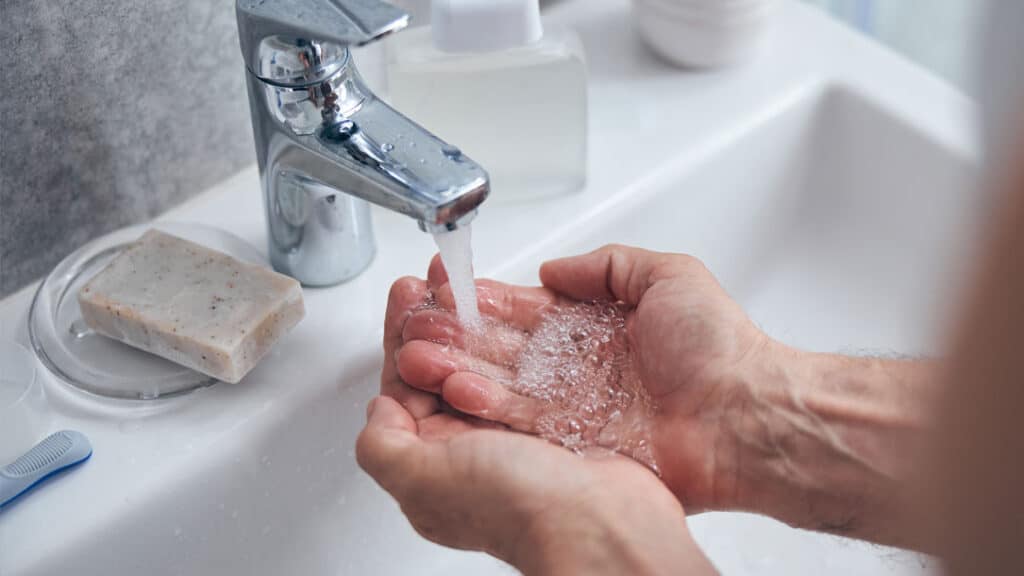
- Wash your hands and gently cleanse the affected area with a mild, fragrance-free cleanser
- Pat the skin completely dry—avoid rubbing
- Use a pea-sized amount for approximately a 2 × 2 inch (5 × 5 cm) area; a thin film is sufficient
- Apply with your fingertip or a nonmetal applicator, lightly rubbing the cream into the entire prescribed field (for example, the entire forehead and temples), not just visible spots
- Avoid sensitive areas including eyelids, nostrils, lips, inside the mouth, and skin folds unless specifically directed by your doctor
- Wash your hands thoroughly with soap and water after application
Important Application Notes
- Do not cover the treated areas with airtight or occlusive bandages unless your dermatologist has specifically recommended this for a resistant lesion
- Most patients are advised not to apply thick moisturizers immediately before fluorouracil, but you can apply a bland moisturizer such as petrolatum or ceramide cream after the medication has absorbed (typically after 30 minutes), if your doctor approves
- If you miss a dose, apply it as soon as you remember unless it’s almost time for your next dose—never double up
Critical safety note: Keep the cream away from children and pets. Accidental ingestion in animals, especially dogs, can be life-threatening and requires immediate veterinary care.
Typical Timelines: 5-FU vs. Other Field Creams
Treatment timelines depend on the body site being treated, your specific diagnosis, the strength of the cream, and your skin’s sensitivity. Here’s what to generally expect.
Fluorouracil (5-FU) Timelines
| Body Area | Typical Duration | Notes |
| Face | 2–4 weeks, once or twice daily | Thinner skin responds faster |
| Scalp | 3–6 weeks | Hair can trap medication; may need longer treatment |
| Arms and hands | 3–6 weeks | Thicker skin responds more slowly |
| Legs | 4–6 weeks | Thickest skin; slowest response |
| Superficial BCC or Bowen’s disease | 4–12 weeks | Requires close dermatologist supervision |
Comparison with Other Field Creams
- Imiquimod: Commonly 2–3 times weekly for 4–6 weeks for actinic keratoses on face/scalp; schedules may extend longer (5 times weekly for 6 weeks) when used to treat superficial basal cell carcinoma
- Diclofenac 3% gel: Usually twice daily for about 60–90 days; the reaction tends to be milder and builds more slowly, offering better tolerability for some patients
- Tirbanibulin: Once daily for 5 consecutive days on a small area; irritation can peak after stopping and last 1–2 additional weeks
Smart Skin Dermatology individualizes these general ranges based on your exact skin findings, age, and medical history. You should receive a clear written plan or after-visit summary with your personal start date, expected stopping window, and follow-up appointment.
How Your Skin Should Look Week by Week With Fluorouracil
Individual responses vary, but this timeline gives you an approximate visual guide for a typical facial 5-FU course. Understanding what’s normal helps reduce anxiety when your skin starts to look alarming.
Standard 3-Week Facial Course
Days 1–4:
- Very little visible change
- Mild pinkness or dryness may appear
- Many patients question whether the medication is “working”
Days 5–10:
- Increasing redness becomes apparent
- Rough spots become more noticeable and prominent
- Mild burning, itching, or stinging begins
- Some flaking and crusting starts to develop
- Previously hidden lesions start becoming visible
Days 11–21:
- Peak reaction occurs
- Bright red patches appear where sun damage existed
- Scabs and crusts form on previously damaged spots
- Skin feels sore and sunburn-like
- Appearance can be alarming but is usually expected
- Some areas may ooze clear fluid
Arms, Hands, and Scalp
For thicker-skinned areas:
- Visible reaction typically starts later (around days 7–14)
- Progression is slower overall
- Peak redness and crusting often occurs closer to weeks 3–4
Mid-Treatment Check-Ins
Smart Skin Dermatology often asks patients to send secure photos or return for a quick check around the time the skin appears worst. This helps fine-tune when to stop treatment based on your actual response rather than a fixed calendar date.
Important: Even after you stop applying fluorouracil, redness and crusting can continue for 1–2 weeks before improving. Several weeks of pinkness during the healing phase is completely normal.
When to Stop Fluorouracil: Under-, Sweet-, and Over-Treatment
You should continue using fluorouracil until the lesions start to peel off or are gone, as directed by your doctor, and you should not stop unless your doctor recommends it. Always follow your doctor’s recommendations to ensure effective treatment and prevent recurrence.
Patients should not decide alone when to stop treatment. This decision should always be confirmed with your dermatologist. However, learning what to watch for helps you communicate effectively with your care team.
Stopping fluorouracil too early can leave abnormal cells untreated, increasing the risk of recurrence or progression of precancerous lesions. Regular check-ups with your doctor are important to monitor your progress while using fluorouracil.
Signs of Undertreatment
After 7–10 days of consistent use, undertreatment may look like:
- Little to no redness or crusting where actinic keratoses were expected
- Skin looks almost normal despite following the prescribed schedule
- Only faint pinkness without clear “eruption” of rough spots
- Treated area doesn’t feel irritated or sensitive
Action: Contact Smart Skin Dermatology. The cream may be too weak, applied too thinly, or used too infrequently. Your doctor’s recommendations may include extending treatment or adjusting technique.
Signs of the “Sweet Spot” (Ideal Stopping Zone)
The optimal time to stop typically shows:
- Confluent red or bright pink areas across the treated field
- Crusting, scabbing, and peeling on previously sun-damaged patches
- Discomfort and stinging that remains tolerable with over-the-counter pain relief and moisturizer
- No large, deep open ulcers
- No thick yellow pus or signs of infection
- You’re at or near the planned end date
Signs of Overtreatment (Stop Early and Call)
Contact Smart Skin Dermatology urgently if you experience:
- Deep, punched-out sores or ulcers rather than surface crusts
- Severe pain not relieved by simple measures, or pain waking you at night
- Marked swelling of eyelids or lips when treating nearby areas, or difficulty opening your eye
- Oozing yellow or green pus, spreading redness, or fever (possible infection requiring other medications)
- Bright, weeping raw skin over large areas extending past your planned treatment duration
What Happens at Your Check-In
Based on how close your skin reaction is to this “sweet spot,” Smart Skin Dermatology may:
- End treatment on schedule as planned
- Shorten your course if response is already adequate
- Extend by a few days in specific areas needing more time
- Provide guidance on entering the healing phase
How Long Does Healing Take After You Stop?
Healing time is separate from treatment time and often lasts longer than patients expect. Don’t be discouraged—this is normal.
Typical Facial Healing Timeline
| Time After Stopping | What to Expect |
| Days 1–14 | Redness often looks worse before fading; crusts and scabs gradually lift; skin feels tight and itchy |
| Weeks 3–6 | Red color turns pink, then starts blending with normal skin; texture smooths; makeup becomes easier to apply |
| Months 2–3 | Final color improvement; remaining pinkness fades in most patients |
Other Body Areas
Arms, hands, and legs typically heal more slowly than the face. Residual redness can persist for several months, especially in patients with very fair or thin skin.
Potential Color Changes
Some patients experience:
- Hypopigmentation: Light or white discoloration in treated areas
- Hyperpigmentation: Mild darkening, particularly in darker skin tones
These changes often improve with time. Smart Skin Dermatology can suggest fading creams or laser options if persistent discoloration becomes a cosmetic concern.
Follow-Up Visit
A scheduled appointment (typically 6–12 weeks after completing therapy) confirms clearance of actinic keratoses or superficial skin cancers. This visit also helps plan any additional spot treatments or maintenance care, and ensures your skin has completely healed.

Examples: What Overdoing and Underdoing Fluorouracil Look Like
Concrete examples help you compare your own experience to what other patients encounter. Here’s what different scenarios actually look like.
Underdone Scenarios
Example 1: A patient applies 5-FU twice daily to the forehead for 14 days as prescribed. The skin is slightly pink but not painful, and rough spots feel almost unchanged when touched. The treatment hasn’t generated adequate response.
Example 2: A patient skips doses on weekends and applies heavy moisturizer immediately after the cream each time. At 3 weeks, the face looks only mildly dry with no scabbing or crusting visible.
What happens next: In both cases, Smart Skin Dermatology may extend the treatment course, increase application frequency, or adjust technique to achieve better efficacy.
Overdone Scenarios
Example 1: A patient continues 5-FU on the cheeks beyond a prescribed 3-week plan, thinking “more must be better.” By week 5, they have bleeding, raw patches and cannot tolerate wash or even gentle cleansing.
Example 2: While treating the nose, a patient accidentally spreads cream onto nostrils and upper lip for several days, leading to deep cracks and painful open sores that prevent eating comfortably.
What happens next: Treatment is stopped immediately, supportive care begins, and the patient is seen urgently. Randomized controlled trials and systematic review data confirm that moderate reactions achieve optimal clearance without these complications.
Sweet Spot Scenario
Example: A patient treats the scalp for 4 weeks as instructed. At week 3, red patches with crusts and noticeable soreness appear exactly where prior rough spots were identified. After photo review through the patient portal, the dermatologist advises stopping at day 28 and starting intensive moisturizing for the healing phase.
This represents the target outcome—sufficient inflammation to clear the abnormal cells without pushing into territory that causes unnecessary harm.
Making Fluorouracil Therapy More Tolerable
Discomfort during fluorouracil treatment is expected but can usually be managed well enough to complete your course safely. Here are practical strategies that help.
Comfort Strategies
- Moisturize appropriately: Use bland, fragrance-free ointments (like petrolatum jelly or ceramide creams) on surrounding skin and on treated areas once your dermatologist confirms it’s okay—often later in the day after medication has absorbed
- Apply cool compresses: Use a clean, damp, cool (not ice-cold) cloth for 10–15 minutes to ease burning and itching
- Consider OTC pain relief: Acetaminophen or ibuprofen can help if approved by your primary care doctor
- Pre-treatment preparation: Research suggests moisturizing for 1–2 weeks before starting fluorouracil may reduce peak irritation intensity by 20–30%
Skin Care Do’s and Don’ts
Do:
- Cleanse gently with a non-soap, fragrance-free cleanser
- Pat dry rather than rubbing
- Protect treated areas from sun
Don’t:
- Use scrubs, brushes, or exfoliating tools
- Apply cosmetics, retinoids, or acids (glycolic, salicylic) unless explicitly approved
- Pick or peel crusts and scabs—let them fall off naturally to reduce scarring risk
Sun Protection During Treatment
Fluorouracil makes skin extremely sensitive to sunlight. Follow these precautions:
- Avoid midday sun as much as possible during and for several weeks after treatment
- Wear protective clothing including wide-brimmed hats and UPF-rated fabrics
- Apply mineral sunscreen (zinc/titanium) with SPF 30+ once skin can tolerate it, if your doctor approves
- Never use tanning beds or tanning booths while on fluorouracil—avoid all artificial uv light sources

Safety Precautions and Who Should Avoid Fluorouracil
Although topical fluorouracil generally acts locally on the skin, there are important safety considerations every patient should understand. Pregnant women should avoid using fluorouracil due to the risk of serious birth defects. It is important to inform your healthcare provider if you are or plan to become pregnant before starting treatment.
Who Should Not Use Fluorouracil
| Condition | Recommendation |
| Pregnancy/breastfeeding | Do not use; inform your dermatologist immediately if pregnancy occurs during treatment |
| DPD enzyme deficiency | Avoid completely; dihydropyrimidine dehydrogenase dpd deficiency (affecting 3–7% of Caucasians) can cause serious systemic toxicity |
| Prior allergic reaction | Anyone with previous severe reaction to fluorouracil or similar medications should use alternative treatments |
Storage and Handling
- Keep medication out of reach of children and pets
- Store in original tube, tightly closed
- Avoid excessive heat and moisture
- Accidental ingestion by pets requires urgent veterinary care
- Topical exposure in children should be washed off immediately and reported to a physician
Ongoing Monitoring
Maintain regular follow-up visits so Smart Skin Dermatology can:
- Monitor for rare but serious side effects
- Adjust treatment as needed
- Perform ongoing skin cancer screening
- Identify any new solar keratosis or concerning lesions that develop
FAQ
Can I use makeup while I am using fluorouracil on my face?
During the peak reaction phase, makeup often feels uncomfortable and can further irritate already inflamed skin. Smart Skin Dermatology generally recommends avoiding cosmetics on treated areas during active treatment.
If makeup is absolutely necessary for a brief event:
- Use minimal, fragrance-free, non-comedogenic products
- Apply gently over a layer of approved moisturizer
- Remove with a very mild cleanser and lukewarm water, avoiding any scrubbing
Many patients plan their fluorouracil course during a period without important social or professional events specifically for this reason.
What if fluorouracil accidentally gets into my eye, nose, or mouth?
Eye exposure: Immediately flush with plenty of lukewarm water for at least 10–15 minutes. Remove contact lenses if present during flushing.
Nose or mouth exposure: Rinse thoroughly with water and spit out any residue without swallowing.
Contact Smart Skin Dermatology or an urgent care facility if there is persistent pain, blurred vision, or significant irritation after rinsing. Bring the medication tube to your visit.
Will I need more than one course of fluorouracil treatment?
Some patients with extensive sun damage may need staged or repeat courses. Common approaches include:
- Treating one area first (forehead and temples), then a different area later (cheeks and nose)
- Repeating treatment on the same field in future years if new actinic keratoses appear
The need for repeat therapy is assessed at follow-up visits based on how many new lesions develop and your ongoing sun exposure patterns. Repeat courses are common and represent proactive prevention of progression to skin cancer.
Can I go back to my regular skin-care routine after fluorouracil, including retinoids and peels?
Wait until the treated area is fully healed—no open areas, crusts, or bright redness—before restarting active products. This typically means waiting at least 4–6 weeks after stopping fluorouracil for facial skin, though exact timing should be confirmed at your post-treatment check.
When reintroducing active ingredients:
- Start retinoids every third night initially
- Avoid professional peels until your dermatologist clears you
- Watch for any signs of re-irritation
Does fluorouracil lighten or darken the skin permanently?
Most patients experience temporary redness and sometimes temporary darkening or lightening during healing. These changes typically resolve within several weeks to months.
In a small percentage of patients—particularly those with darker skin tones or very intense reactions—some color changes can persist longer and occasionally become long-term. Smart Skin Dermatology can discuss sun protection strategies, lightening creams, or laser treatments if persistent discoloration becomes a cosmetic concern.
Summary
Understanding how to use fluorouracil cream correctly—and recognizing when you’ve hit the treatment sweet spot—makes the difference between effective treatment and unnecessary discomfort. The key is working closely with your dermatologist rather than adjusting your course independently.
If you have questions about your fluorouracil treatment or notice concerning symptoms, contact Smart Skin Dermatology promptly. Schedule your follow-up appointment to confirm your actinic keratoses have cleared and discuss any ongoing skin protection needs.

Lindsey is a board-certified Physician Assistant with over a decade of experience in dermatology. Born and raised in Salt Lake City, she earned her undergraduate degree in Human Movement Science from Utah State University on a full-ride soccer scholarship before completing her master’s in Physician Assistant Studies at A.T. Still University. She treats patients of all ages, with a special interest in acne, skincare, and cosmetic dermatology, and is passionate about education and helping train the next generation of physician assistants.