

Is Eczema an Autoimmune Disease? Understanding the Immune Connection
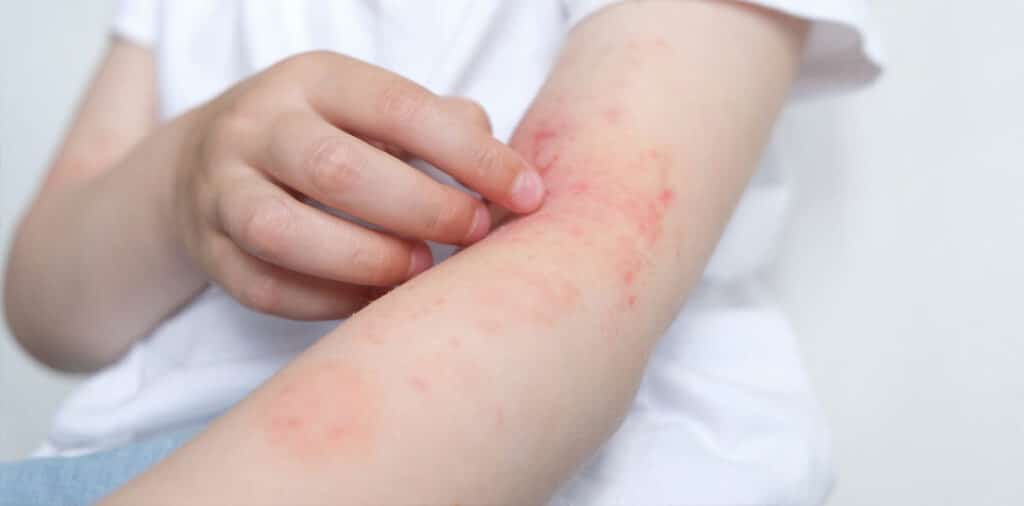
If you or your child deals with eczema, you’ve probably asked this question at least once. The itch is relentless, the flare ups keep coming back, and somewhere along the way you read that it might be autoimmune. Let’s set the record straight and walk through what’s actually happening in your skin and your immune system.
The Short Answer: Is Eczema an Autoimmune Disease?
No. Eczema is not classified as an autoimmune disease. Even though the immune system plays a major role in driving eczema symptoms, the condition works differently from classic autoimmune disorders at a fundamental level.
An autoimmune disease occurs when the immune system attacks the body’s healthy tissues, mistaking them for a threat. In rheumatoid arthritis, the immune system targets joint linings. In systemic lupus erythematosus, it can attack the kidneys, skin, and other organs. In psoriasis, immune cells go after skin cells directly. Each of these conditions has a specific target the body attacks on its own.
Eczema, also called atopic dermatitis, doesn’t follow that pattern. It’s best described as an immune-mediated or inflammatory skin condition. The immune system doesn’t single out a part of your body to destroy. Instead, it overreacts to irritants, allergens, and microbes that slip through a weakened skin barrier, flooding the area with inflammation that causes the redness, swelling, and relentless itch you know too well.
If you’ve searched phrases like “eczema an autoimmune disease,” “eczema an autoimmune,” or “eczema and autoimmune diseases,” you’re not alone. These searches come from real observations: eczema does share some immune pathways with autoimmune conditions, and the two can coexist. But sharing some immune features is not the same as being the same disease. This article will break down exactly what those overlaps mean and where the line sits.
What Exactly Is Eczema (Atopic Dermatitis)?
Atopic dermatitis is the most common form of eczema and one of the most widespread skin conditions in the world. It’s a chronic inflammatory skin disease characterized by persistent dryness, intense itching, and recurring patches of inflamed skin that can significantly affect daily life and sleep quality.
The numbers are substantial. Eczema affects 15–20% of children and roughly 10% of adults in developed countries like the United States and across Western Europe. That makes it one of the most frequently seen diagnoses in dermatology clinics.
Eczema symptoms may include intense itching, dry skin, and red inflamed patches. During flare ups, those patches can ooze, crust over, or crack painfully. Over months or years of scratching and chronic inflammation, the skin can thicken and develop a leathery texture, a change dermatologists call lichenification.
Where eczema shows up depends largely on age. Infants tend to develop rashes on their cheeks, scalp, and the outer surfaces of their arms and legs. Older children and adults typically see patches in the creases of their elbows, behind the knees, on the neck, hands, and eyelids. Atopic eczema can also appear in less expected areas like the feet, chest, or around the eyes.
The condition is chronic but tends to wax and wane. Patients experience stretches of relatively clear skin interrupted by sudden flare ups triggered by environmental factors, stress, illness, or changes in routine. Some children outgrow it; others carry it into adulthood or develop it for the first time as adults.
What Does It Mean to Have an Autoimmune Disease?
To understand why eczema doesn’t fit the autoimmune category, it helps to know what autoimmune actually means.
In a healthy body, the immune system is trained to distinguish between “self” (your own cells and proteins) and “non-self” (bacteria, viruses, foreign substances). In autoimmune disorders, that training breaks down. The immune system misidentifies the body’s own healthy tissues as dangerous invaders and launches a sustained attack against them. In autoimmune diseases, the immune system mistakenly attacks healthy tissues, often producing chronic damage that requires long-term treatment.
The list of autoimmune conditions is long and varied. Rheumatoid arthritis targets the joint lining. Type 1 diabetes destroys insulin-producing cells in the pancreas. Celiac disease damages the small intestine in response to gluten. Sjögren’s syndrome attacks moisture-producing glands. Multiple sclerosis damages the protective coating around nerves. Autoimmune skin diseases include psoriasis, vitiligo (where melanocytes are destroyed), and bullous pemphigoid (where autoantibodies attack the skin’s basement membrane). Autoimmune diseases often produce symptoms that vary widely depending on the condition, from joint swelling and abdominal pain to hair loss and scaly patches.
A hallmark of autoimmune disease is the presence of identifiable biomarkers: autoantibodies or immune cells that can be measured in blood tests or tissue biopsies, confirming the body is attacking a specific target. That’s a key distinction we’ll return to.
Eczema vs Autoimmune Diseases: Key Differences
Both eczema and autoimmune diseases involve the immune system, chronic inflammation, and the need for ongoing management. But the similarities largely stop there.
In autoimmune conditions, there’s a clear autoimmune response: the immune system identifies a specific part of the body as the enemy and attacks it. Autoantibodies or autoreactive T-cells directed against a particular protein or tissue can usually be detected. In atopic dermatitis, those markers are typically absent. Blood tests looking for autoantibodies come back negative in uncomplicated eczema. Eczema involves abnormal immune cell responses, not a directed tissue attack against a defined self-structure.
The triggers are also different. Eczema flare ups are provoked by external factors: a harsh detergent strips your skin barrier, cold dry air pulls moisture from the surface, or dust mites trigger an allergic reaction. The immune system responds with excessive inflammation, but it’s reacting to something from outside. In contrast, a lupus flare might involve the immune system generating immune complexes that deposit in the kidneys, joints, or blood vessels, causing damage from within.
Treatment philosophy reflects these differences, too. Eczema treatments generally focus on repairing the skin barrier and managing inflammation through targeted treatments that address specific immune pathways. Many autoimmune conditions require broader immunosuppression to prevent the body from continuing to damage its own organs.
The Two‑Part Problem: Skin Barrier + Immune System
Understanding eczema means recognizing that it’s driven by two problems happening at the same time: a defective skin barrier that lets trouble in, and an immune system that dramatically overreacts when trouble arrives.
Healthy skin works like a well-sealed wall. The outermost layer, made of tightly packed skin cells held together by lipids and structural proteins, keeps moisture locked in and keeps irritants, allergens, and bacteria locked out. In eczema, that wall has gaps. Eczema involves a dysfunctional immune response combined with a compromised skin barrier, and both sides of the equation must be addressed for treatment to work.
Once irritants penetrate the barrier, immune cells rush to the scene, releasing inflammatory signals that produce itching, redness, and swelling. That inflammation then weakens the barrier further, allowing more irritants in and more moisture out. The result is a self-reinforcing cycle of damage, inflammation, and flare ups that can be difficult to interrupt without the right approach.
The Outside Story: Skin Barrier Defects
Your skin’s outermost layer is built from flattened cells (corneocytes) held together by a “mortar” of lipids and reinforced by structural proteins. One of the most important of these proteins is filaggrin, which helps bind the cells together and retain moisture.
Many people with atopic dermatitis carry genetic variants in the filaggrin gene that reduce or eliminate filaggrin production. Research has shown that roughly 12–13% of children with eczema in European cohorts carry common filaggrin null mutations, making their barrier “leaky” from birth. Eczema is linked to environmental factors and skin barrier defects, meaning that even without a genetic mutation, daily exposures can weaken the barrier significantly.
Everyday habits compound the problem. Hot showers strip natural oils. Harsh soaps dissolve the lipid mortar. Cold, dry winter air pulls moisture from skin faster than it can be replaced. Frequent handwashing, scratchy fabrics like wool, and friction from tight clothing all contribute to micro-damage.
A damaged barrier also becomes a hospitable environment for Staphylococcus aureus, a type of skin bacteria that colonizes eczema-affected areas at far higher rates than healthy skin. These bacteria release toxins that provoke additional immune responses, further worsening the cycle of barrier breakdown and inflammation.
This is why barrier-focused care-thick, fragrance-free emollients, gentle cleansers, and protective skin repair creams-forms the foundation of any eczema treatment plan.
The Inside Story: Immune System Overreaction
When irritants, allergens, or microbes cross a weakened skin barrier, the immune system doesn’t respond proportionally. It panics.
Damaged skin cells release alarm signals called alarmins (including TSLP, IL-25, and IL-33) that activate nearby immune cells and kick off an inflammatory cascade. In eczema, this cascade is dominated by what immunologists call type 2 inflammation, a particular arm of the immune system that fuels allergy-type reactions. Key inflammatory messengers in this pathway include IL-4, IL-13, and IL-31, which drive the signature itch, redness, and swelling.
The immune system is over-responsive in eczema cases, not because it’s broken, but because it’s calibrated too aggressively. The immune responses generated are genuine but disproportionate, creating far more inflammation than the original irritant warranted.
This is a critical distinction from autoimmune disease. In eczema, the immune system isn’t seeking out and destroying a specific target within your body. It’s oversensitive to external provocations. There’s immune dysregulation, yes, but it’s reactivity rather than self-attack.
Understanding this mechanism has led to a new generation of targeted treatments that block specific cytokines involved in eczema without shutting down the entire immune system. Biologics like dupilumab block the IL-4/IL-13 pathway directly, while JAK inhibitors interrupt the signaling cascade downstream. These therapies validate the science: calming the overactive arm of the immune system produces meaningful improvement.
Eczema vs Psoriasis: A Helpful Comparison
Comparing eczema with psoriasis is one of the clearest ways to see the difference between an immune-mediated condition and a true autoimmune disease.
Psoriasis is generally classified as an autoimmune disease because the immune system directly targets keratinocytes (skin cells) through Th17 and Th1 immune pathways. This produces the characteristic thick, well-defined, silvery scaly patches that typically appear on the elbows, knees, scalp, and lower back. Some patients also develop psoriatic arthritis, where the same autoimmune process affects the joints. Severe psoriasis can significantly impact quality of life and is associated with cardiovascular and metabolic complications.
Eczema looks and feels different. Patches tend to be ill-defined, intensely itchy, and often oozy or crusted during flare ups, showing up primarily in skin folds rather than on extensor surfaces. The underlying immune profile is dominated by type 2 inflammation rather than the Th17/Th1 pathways seen in psoriasis. These biological differences explain why the two conditions respond to entirely different classes of biologic drugs.
If you’re unsure whether your rash is eczema, psoriasis, or something else like seborrheic dermatitis or contact dermatitis, a dermatologist can distinguish between them through a careful examination and, when needed, additional testing.
Is Eczema a Sign of a Weak Immune System?
This is one of the most common misconceptions, and the short answer is no. Having eczema does not mean you have a weak immune system.
In fact, the problem is closer to the opposite. Certain immune pathways in eczema are overactive and overly sensitive. The immune system isn’t failing to respond; it’s responding too aggressively to stimuli that should be harmless.
Most people with eczema are otherwise immunologically healthy. They fight off colds, respond to vaccines, and recover from illnesses just as well as anyone else. The exception is localized skin infections. Because the skin barrier is compromised, bacteria, viruses (like the cold sore virus), and fungi can enter more easily through cracked or scratched skin. That’s a barrier issue, not systemic immune weakness.
Parents often worry that their child’s eczema means something deeper is wrong. In the vast majority of cases, it doesn’t. However, if a child experiences unusually frequent or severe infections, poor growth, or other concerning symptoms beyond typical eczema, it’s worth discussing those with a dermatologist or pediatrician to rule out other conditions.
Common Eczema Triggers and Why Flare Ups Happen
Eczema flare ups rarely happen at random. They follow patterns tied to common triggers that either damage the barrier, activate immune responses, or both.
Among the most frequent triggers are dry climate and cold winter air, which pull moisture from the skin surface rapidly. Heat and sweating can irritate already-sensitized skin. Harsh soaps, detergents, and fragrances dissolve protective lipids. Scratchy fabrics like wool cause friction. Dust mites, pet dander, and pollen can provoke allergic reactions in sensitized individuals. Stress amplifies inflammation through neuroimmune pathways. Skin infections can set off aggressive flare ups.
Each trigger interacts with the barrier-immune system cycle differently, but the endpoint is the same: the barrier weakens, irritants penetrate, and the immune system responds with a wave of inflammation that produces the familiar red patches, itching, and discomfort.
What makes eczema management tricky is that environmental triggers vary widely between people. One person’s worst trigger might be laundry detergent; another’s might be stress or seasonal pollen. Keeping a simple symptom diary, noting what you were exposed to before each flare, can help identify the two or three triggers that matter most for you. Avoiding every possible irritant isn’t realistic, but managing your major ones can make a substantial difference.
Eczema frequently coexists with asthma and hay fever, a pattern doctors call the “atopic march.” If you notice respiratory symptoms alongside your skin condition, mention that to your dermatologist, as it can inform the overall treatment strategy.
When Eczema Coexists With Autoimmune Diseases
Here’s where the relationship between eczema and autoimmune conditions gets nuanced.
While eczema itself is not autoimmune, research consistently shows that individuals with eczema have a higher statistical risk of developing autoimmune diseases over time. A meta-analysis of 26 observational studies comparing approximately 1.63 million atopic dermatitis patients with over 15 million controls found that eczema is associated with a 49% increased risk of autoimmune diseases overall.
The risk isn’t spread evenly across all conditions. According to that same analysis, the highest associations were seen with alopecia areata (an autoimmune condition that attacks hair follicles, causing hair loss in patches), psoriasis, celiac disease, vitiligo, and systemic lupus erythematosus. Atopic dermatitis is associated with autoimmune diseases like rheumatoid arthritis, with moderately elevated risk also seen for thyroid dysfunction and inflammatory bowel disease, which includes Crohn’s disease and ulcerative colitis. Women with eczema are more likely to develop autoimmune diseases than men with the condition.
Research also suggests a dose-response relationship: patients with severe eczema face a higher risk than those with mild disease. A UK cohort study found that severe atopic dermatitis carried roughly double the risk of developing a new autoimmune condition compared to matched controls without eczema.
Why does this overlap exist? The leading explanations point to shared genetic susceptibility, overlapping immune pathways, and the possibility that years of chronic inflammation may predispose the immune system to further dysregulation. Family history of both atopic and autoimmune conditions appears to be an important risk factor.
But context matters. Most people with eczema will never develop a serious autoimmune disorder. These are population-level statistical associations, not individual certainties. Still, if you notice new or unusual symptoms-persistent joint pain, unexplained weight loss, patches of hair loss, or gastrointestinal issues-it’s worth bringing them up with your dermatologist. Further research and future studies will continue to clarify the biological mechanisms behind this overlap. Institutions like Harvard Medical School and the National Eczema Association continue to investigate these connections.
How Medical Dermatology Restores Balance
Effective eczema care isn’t about choosing between treating the skin barrier or calming the immune system. It requires addressing both simultaneously.
A thorough dermatology consultation starts with a complete skin exam, a detailed review of your symptom history and triggers, an assessment of severity, and a discussion of what you’ve already tried. This evaluation is essential because eczema varies enormously from person to person, and a treatment plan that works for one patient may not suit another.
The core treatment pillars include gentle skincare and barrier repair, control of inflammation and itch, management of skin infections when they arise, and thoughtful trigger modification. Modern medical dermatology offers far more than just another tube of steroid cream. Steroid-sparing topical agents, phototherapy, and advanced systemic therapies have expanded the tool kit dramatically.
Eczema is not an autoimmune disease but an inflammatory condition, and this distinction matters for treatment. Rather than broadly suppressing the immune system, the most effective current therapies are designed to precisely target the overactive pathways driving the disease. Most patients improve with a personalized treatment plan that combines barrier repair with the right level of immune modulation for their severity.
Treatment Options: From Barrier Repair to Advanced Therapies
Think of eczema treatment as layers that build on each other, matched to how severe and persistent your disease is.
For mild eczema, the foundation is consistent barrier care: thick, fragrance-free moisturizers applied daily (especially right after bathing), gentle non-soap cleansers, lukewarm baths, and avoiding known irritants. When flare ups occur, short courses of low- to mid-potency topical corticosteroids bring inflammation under control quickly. These basics are effective for a large number of patients and should never be skipped, even when more advanced therapies are added.
For areas where long-term steroid use is a concern-like the face, eyelids, or skin folds-steroid-sparing topical options provide an alternative. These include topical calcineurin inhibitors (tacrolimus, pimecrolimus), PDE4 inhibitors (crisaborole), and topical JAK inhibitors (ruxolitinib cream). Each works by calming local inflammation through different mechanisms without the thinning risk associated with prolonged steroid use.
For moderate to severe eczema that doesn’t respond adequately to topicals, the treatment landscape has expanded substantially. Phototherapy remains an option for widespread disease. Oral or injectable therapies target overactive immune pathways more directly. Biologic injections like dupilumab (which blocks the IL-4 receptor), tralokinumab, and lebrikizumab (targeting IL-13) address type 2 inflammation with precision. Oral JAK inhibitors like abrocitinib and upadacitinib offer rapid onset of relief. Effective therapies target specific immune pathways in eczema, and updated clinical guidelines from the AAD now strongly recommend these newer options for adults with moderate to severe disease.
These systemic therapies are carefully selected and monitored, particularly when patients have coexisting autoimmune conditions, multiple autoimmune diseases, or other medical concerns that require balancing effectiveness with safety.
Everyday Lifestyle Choices That Truly Help
Alongside medical treatment, a few consistent daily habits can meaningfully reduce the frequency and severity of flare ups.
Moisturize immediately after bathing, while the skin is still slightly damp, to lock in hydration. Use fragrance-free laundry detergents and skip fabric softeners, which often contain irritants. Wear soft cotton layers next to the skin, especially at night. If you live in a dry climate, a bedroom humidifier can help maintain skin hydration overnight.
Be cautious about extreme elimination diets or unproven “eczema cures” found online, particularly for children. Unnecessary dietary restrictions can lead to nutritional deficiencies without improving skin. If you suspect a food trigger, work with your dermatologist or allergist to pursue supervised testing rather than guessing.
Simple habits add up. Keep nails trimmed short to minimize damage from nighttime scratching. Manage stress through whatever works for you, whether that’s exercise, sleep hygiene, or mindfulness practices. And if dry skin is a persistent problem, consider applying a thin layer of ointment-based moisturizer to problem areas before bed.
When to See a Dermatologist About Your Eczema
Not every case of eczema requires a specialist, but many do. If your symptoms persist or worsen despite consistent over-the-counter care, it’s time for professional evaluation. The same applies if itching disrupts your sleep, if you’re getting frequent skin infections (oozing, crusting, itchy blisters, or warm red patches), or if you’re unsure whether your rash is actually eczema.
A dermatologist’s exam can distinguish eczema from conditions that mimic it, including psoriasis, contact dermatitis, fungal infections, or less common autoimmune rashes. In some cases, patch testing or bloodwork may be recommended to clarify the picture.
What to expect at your visit: a thorough skin examination, a conversation about your history and triggers, and a step-by-step treatment plan tailored to your specific situation. Early intervention, especially in children with rapidly evolving skin, often leads to better long-term control and fewer disruptions to daily life.
If you’re dealing with persistent eczema or have questions about whether your symptoms might overlap with an autoimmune condition, scheduling a comprehensive evaluation is the most productive next step you can take.
Contact Smart Skin Dermatology today to schedule your consultation and take the first step toward clearer, healthier skin. Our experienced dermatologists are here to help you understand and manage your eczema with personalized care.
Frequently Asked Questions About Eczema and Autoimmune Conditions
Is eczema an autoimmune disease or an autoimmune disorder?
No. Eczema is an immune-mediated inflammatory skin condition, not an autoimmune disease or autoimmune disorder. While the immune system is heavily involved, it does not specifically attack your body’s own tissues the way it does in conditions like lupus or rheumatoid arthritis.
Can eczema turn into an autoimmune disease?
Eczema itself does not “turn into” an autoimmune disease. However, people with atopic dermatitis do have a modestly higher risk of developing certain autoimmune conditions over time, likely due to shared genetic and immune risk factors. Having eczema does not guarantee any autoimmune diagnosis.
Is eczema contagious?
No. Eczema is not contagious. You cannot catch it from someone else or spread it through contact. It results from a combination of genetic predisposition, barrier dysfunction, and immune overreactivity.
Does having eczema mean my immune system is weak?
Not at all. Eczema reflects an overactive, not underperforming, immune system. Certain inflammatory pathways are turned up too high, but your ability to fight infections systemically remains intact.
Can stress trigger eczema flare ups?
Yes. Stress is a well-recognized trigger for eczema flare ups. It can amplify inflammation through neuroimmune connections and disrupt sleep, which further impairs skin healing.
Is there a cure for eczema?
There is currently no cure for atopic dermatitis, but the condition is highly manageable. With the right combination of barrier repair, trigger management, and targeted treatments, the majority of patients achieve significant improvement and long stretches of clear or near-clear skin.
Should I get tested for autoimmune diseases if I have eczema?
Routine autoimmune screening isn’t recommended for everyone with eczema. However, if you develop new symptoms such as red patches that look different from your usual eczema, joint pain, unexplained weight loss, or patches of hair loss, discuss these with your dermatologist to determine whether further evaluation is appropriate.

Carrie Jackman, PA-C, brings a unique blend of expertise, passion, and genuine care to Smart Skin Dermatology. Carrie’s passion extends beyond treating specific conditions. She thrives on building relationships with her patients, providing a warm and welcoming environment where everyone feels comfortable and heard. Her genuine care shines through in her interactions, ensuring each patient receives personalized attention and understanding.