
Can a Dermatologist Remove a Cyst
Key Takeaways
- Yes, board-certified dermatologists at Smart Skin Dermatology routinely remove and treat most common skin cysts (like epidermoid, pilar, and acne cysts) safely in the office under local anesthesia.
- Removal usually involves a small incision and extracting the cyst sac to prevent recurrence, and the entire visit is typically under 30–45 minutes.
- Not every cyst requires immediate removal; small, painless, stable cysts can sometimes be monitored, while painful, growing, or infected cysts should be evaluated promptly.
- Attempting to squeeze, pop, or cut out a cyst at home can lead to infection, scarring, and recurrence—professional care keeps scarring as minimal as possible.
You’ve noticed a firm, round lump under your skin. Maybe it’s been there for months, slowly growing. Maybe it recently became tender, red, or started draining something unpleasant. Whatever brought you here, you’re likely wondering: can a dermatologist remove a cyst?
The short answer is yes—and it’s one of the most common procedures dermatologists perform.
At Smart Skin Dermatology, cyst removal is a routine part of care. Whether you’re dealing with a bothersome bump on your scalp, a recurring lump on your back, or a painful cyst on your face, understanding your treatment options can help you make an informed decision about next steps.
This guide walks you through everything you need to know: what skin cysts are, the common types dermatologists treat, how the removal procedure works, and what recovery looks like.
What Is a Skin Cyst?
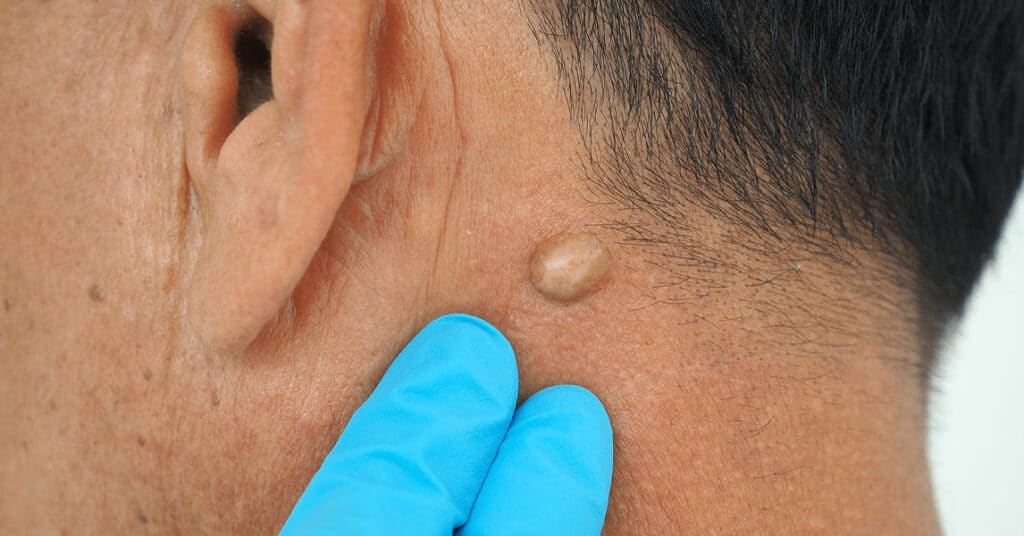
A cyst is a closed sac under the skin that’s typically filled with keratin, fluid, pus, or other semi-solid material. Most cysts are benign—meaning they’re not cancerous—but they can be bothersome, unsightly, or occasionally painful.
Where Do Cysts Commonly Appear?
Skin cysts show up in areas where skin cells, oil, or hair follicle material can become trapped. Common locations include:
| Location | Notes |
| Face | Often near the eyes, cheeks, or forehead |
| Scalp | Pilar cysts are especially common here |
| Neck | Can catch on collars or jewelry |
| Back and chest | May grow quite large before noticed |
| Groin and underarms | Friction-prone areas |
When you press on a cyst, it often feels like a smooth, round “marble” or pea under the skin that moves slightly. This is different from a fixed, hard mass, which warrants different evaluation.
How Do Cysts Form?
Cysts develop when skin cells, sebum from sebaceous glands, or material from hair follicles gets trapped beneath the skin surface instead of shedding normally. Over time, this trapped material accumulates inside a small sac, which slowly enlarges.
While many cysts are harmless and stay small for years, some can become inflamed, infected, or cosmetically distressing. That’s when dermatologic removal becomes important.
Common Types of Cysts Dermatologists Treat
Not all cysts are the same. Understanding which type you have helps determine the best treatment approach. At Smart Skin Dermatology, the most frequently treated types include:
- Epidermoid (epidermal inclusion) cysts
- Pilar (trichilemmal) cysts
- Dermoid cysts
- Inflamed acne cysts
Each type has different behavior and typical locations, so diagnosis by a dermatologist is essential before deciding on removal.
Epidermoid (Epidermal Inclusion) Cysts
These are what most people think of when they say “sebaceous cysts”—though technically, true sebaceous cysts are rare. Epidermoid cysts are small sacs under the skin filled with keratin, a soft, cheese-like material made of skin protein.
Typical characteristics:
- Found on face, neck, shoulders, chest, and back
- May have a visible central pore or “blackhead-like” opening on the surface
- Grow slowly over months or years
- Usually painless unless inflamed or infected
When an epidermoid cyst becomes red, swollen, or tender, it often means the wall has ruptured internally or bacteria have entered. Dermatologists at Smart Skin Dermatology can remove these cysts in-office when they’re causing pain, frequent inflammation, or cosmetic concerns.
The key to preventing recurrence? Complete removal of the cyst wall. If any portion of the sac remains, the cyst can refill in the same spot.
Pilar (Trichilemmal) Cysts
Pilar cysts develop almost exclusively from hair follicles on the scalp. They often run in families, so if your parents had multiple scalp cysts, you may develop them too.
What to know about pilar cysts:
- Feel like firm, smooth bumps under the scalp skin
- Can make hair brushing or lying on the back of your head uncomfortable
- Patients may have one or multiple cysts simultaneously
- Rarely go away on their own
Removal is the only way to permanently eliminate a pilar cyst. At Smart Skin Dermatology, these are removed under local anesthesia through a small incision that’s typically hidden within the hair-bearing scalp, minimizing visible scarring.
Dermoid Cysts
Unlike other cysts that develop during adulthood, dermoid cysts are congenital—present from birth. They form when skin structures become trapped under the skin during early fetal development.
Key facts:
- Common locations include around the eyes, nose, scalp, or along the midline of the face
- Often become noticeable in childhood or adolescence as they slowly grow
- Some may connect deeper into tissues, requiring imaging (ultrasound or MRI) before removal
Because of their potential depth, dermatologists and surgeons may collaborate on certain dermoid cyst cases. If you notice a firm, stable lump on a child’s face or scalp that’s been present for months to years, scheduling an evaluation is wise.
Inflamed Acne Cysts (Cystic Acne)
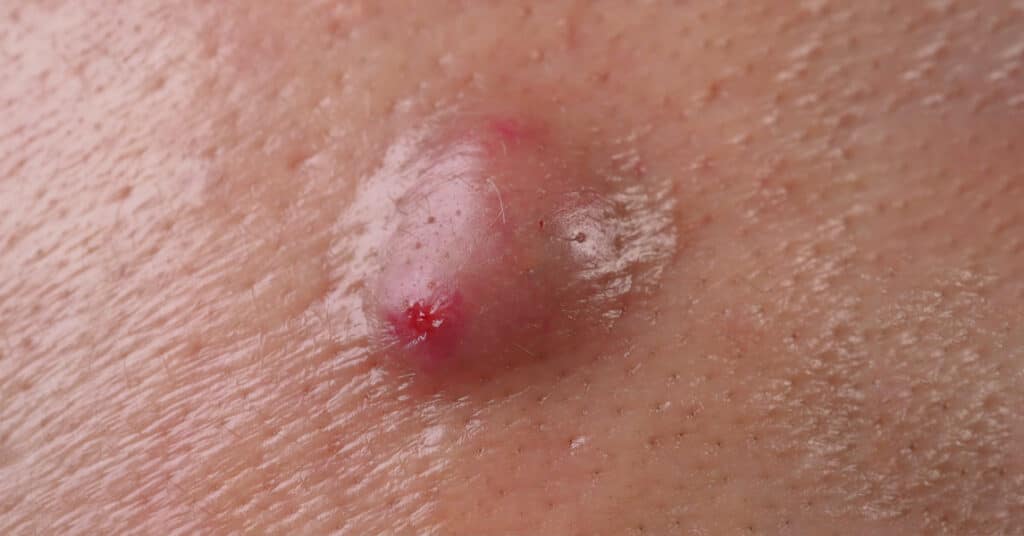
Acne cysts aren’t true cysts in the dermatologic sense—they’re actually large, tender, deep inflammatory nodules or abscesses. But patients often call them cysts, and they certainly feel like painful lumps.
Characteristics of cystic acne:
- Large, red, painful bumps on face, jawline, chest, and back
- Common in teens and adults with moderate to severe acne
- High risk of permanent scarring if not properly treated
Smart Skin Dermatology treats cystic acne with medical therapies including topical prescriptions, oral antibiotics, isotretinoin, and in-office steroid injections into individual cysts to reduce inflammation quickly.
Occasionally, a very large or persistent acne cyst may be carefully drained to speed healing. But here’s what’s critical: picking or trying to pop acne cysts at home greatly increases the risk of dark marks and long-term scars.
Can a Dermatologist Remove a Cyst?
Yes. Dermatologists are the specialists who most commonly diagnose and remove cysts, and this is a routine part of care at Smart Skin Dermatology.
Whether a dermatologist recommends removal depends on several factors:
| Factor | Considerations |
| Cyst type | Epidermoid, pilar, dermoid, or other |
| Size | Small cysts may be observed; larger ones often removed |
| Location | Facial cysts, scalp, or cosmetically sensitive areas |
| Symptoms | Pain, drainage, recurrent inflammation |
| Cosmetic impact | Patient’s preference for removal |
Dermatologists can remove most epidermoid, pilar, and superficial dermoid cysts in the office using local anesthesia, a small incision, and sterile technique. The procedure is straightforward and typically completed in under an hour.
Some deeper or more complex cysts—such as certain midline facial dermoid cysts with deeper connections—may be referred to a specialist like a plastic surgeon or ENT after the initial dermatologic evaluation.
The goal isn’t just to drain the bump. It’s to remove the entire cyst, including the cyst wall, so the cyst is much less likely to recur.
When Should You See a Dermatologist for a Cyst?
Not every small cyst is an emergency. But there are clear situations where prompt dermatology evaluation is important.
Red Flags That Warrant a Visit
- Rapid growth over days to weeks
- Increasing pain or tenderness
- Redness and warmth spreading around the cyst
- Drainage of pus or foul-smelling material
- Location on the face, eyelids, or genitals
- Bleeding or noticeable changes in appearance
Beyond urgent symptoms, cysts that repeatedly become inflamed, catch on clothing, interfere with shaving, or cause embarrassment are also good candidates for removal.
Patients can schedule a dedicated cyst evaluation visit at Smart Skin Dermatology. For painful lesions, same-day or next-available appointments are often possible.
Pro tip: Don’t wait until a cyst is severely infected. Removal is generally easier and leaves a smaller scar when performed before severe inflammation develops.
How Does a Dermatologist Remove a Cyst?
The in-office cyst removal process at Smart Skin Dermatology follows a predictable pattern:
- Examination and diagnosis confirmation
- Local anesthesia to numb the area
- Small incision over the cyst
- Gentle removal of the cyst sac and contents
- Closure with stitches or adhesive strips as needed
The specifics differ slightly depending on whether the cyst is intact or inflamed. Let’s break down both scenarios.
Excision of an Intact Cyst
When a cyst isn’t severely inflamed, surgical removal (excision) is the preferred method because it offers the lowest recurrence rate.
Here’s what happens step-by-step:
- The skin over the cyst is cleaned with antiseptic
- A local anesthetic (typically lidocaine) is injected to numb the affected area
- The dermatologist makes a small elliptical or punch incision over the cyst
- The entire cyst—wall and contents—is carefully freed from surrounding tissue
- The skin is closed with fine stitches, skin glue, or adhesive strips
For small to medium cysts, the procedure takes about 15–30 minutes. You’ll feel pressure and tugging, but after the numbing takes effect, you shouldn’t feel sharp pain.
The incision size matters for scarring. Techniques like minimal excision (using a 2–3mm incision) can reduce scar length to about one-third of the cyst’s diameter while still achieving complete removal.
Draining an Inflamed or Infected Cyst
If a cyst is acutely painful, red, hot, and filled with pus, immediate full excision may not be ideal. The inflamed tissue doesn’t hold stitches well and has higher complication rates.
In these cases, a two-step approach is common:
- Incision and drainage (I&D): The area is numbed, a small opening is made, and pus and debris are gently expressed to relieve pressure and pain
- Supportive care: Warm compresses and sometimes prescribed antibiotics (typically a 5–10 day course) help the infection clear
- Delayed excision: Once inflammation settles—usually 4–6 weeks later—complete surgical removal of the remaining cyst sac is performed
Why the second step? Simple draining alone, without removing the sac, leads to the cyst coming back in the same spot in up to 40–50% of cases.
Other Options: Steroid Injections and Observation
Not every cyst needs to be cut open.
Observation: Small, minimally symptomatic cysts can be safely monitored with periodic check-ins if the patient prefers to avoid surgery.
Steroid injections: Intralesional corticosteroid injections are commonly used at Smart Skin Dermatology to quickly reduce inflammation in painful acne cysts. A small amount of medication is injected directly into the cyst, often producing noticeable improvement within 24–48 hours.
Steroid injections are particularly valuable for:
- Painful facial cysts before events or photos
- Reducing the risk of acne scarring
- Situations where surgery isn’t immediately desired
Keep in mind that steroid injections don’t physically remove the cyst sac—they’re an adjunct treatment or temporary measure, not a permanent cure. Discuss the pros and cons with your dermatologist, including your cosmetic goals, medical history, and tolerance for downtime.
Does Cyst Removal Hurt, and What Is Recovery Like?
Most patients tolerate cyst removal very well. The discomfort you’ll feel is primarily:
- Brief stinging during the local anesthetic injection (like a pinch)
- Pressure and tugging during the procedure (not sharp pain)
The local anesthetic works within a minute or two and typically lasts several hours after the procedure, giving you time to get home comfortably.
What to Expect During Recovery
| Timeframe | What’s Normal |
| First 24 hours | Keep the area clean and dry; mild pain controlled with acetaminophen or ibuprofen |
| Days 1–7 | Mild soreness, tightness, or bruising; follow specific instructions for wound care |
| Days 5–7 | Facial stitches typically removed |
| Days 10–14 | Trunk, scalp, or extremity stitches removed |
Cyst removal aftercare guidelines typically include:
- Keeping the area clean and protected with a bandage
- Avoiding heavy lifting or strenuous exercise that pulls on the incision site
- Watching for signs of infection (increasing redness, warmth, pus, or fever)
- Attending your follow up appointment for suture removal
Most people return to normal activities the same day or next day. You might need to skip the gym for a few days, but desk work is usually fine.
Risks, Scarring, and Recurrence
Let’s be upfront about what can happen—the good and the not as good—so you can make an informed decision.
Common, Usually Minor Risks
- Temporary bruising and swelling
- Mild pain or discomfort for a few days
- A small scar at the incision site (expected with any surgery)
Less Common Risks
- Infection (occurs in about 1–2% of cases; prevent complications by following wound care instructions and taking prescribed antibiotics if given)
- Bleeding or hematoma (usually controlled with pressure)
- Wound separation (more likely if you’re too active too soon)
- Thick or keloid scarring (especially on chest, shoulders, and in patients with darker skin tones)
- Incomplete removal leading to recurrence (10–20% if any cyst wall remains)
Smart Skin Dermatology works to minimize scarring through sterile technique, careful incision planning along skin tension lines, and personalized aftercare instructions. Even with optimal technique, some scar is inevitable—but the goal is a thin, flat line that fades significantly over time.
Even when a cyst is completely removed, there’s always a small chance of recurrence or of other cysts forming in the same region. If this happens, follow-up care can address it.
Cost and Insurance Considerations
Understanding the financial side helps you plan ahead.
Medical necessity matters: Cyst removal performed for medical reasons—pain, recurrent infection, interference with daily activities—is often covered by health insurance. Coverage varies depending on your specific plan, deductible, and copay structure.
Cosmetic removal: If the cyst is purely a cosmetic concern and isn’t causing symptoms, insurance may not cover the procedure. Check with your insurer in advance.
Typical Cost Components
| Component | Description |
| Office visit | Initial consultation and evaluation |
| Procedure fee | Surgical removal itself |
| Pathology fee | If the cyst is sent to a lab for microscopic confirmation |
| Follow-up visits | Suture removal and wound check |
Before your appointment, contact Smart Skin Dermatology’s office staff to get an estimate based on your insurance details and the anticipated procedure. Bring your insurance card and medication list to streamline care and billing.
Why Choose Smart Skin Dermatology for Cyst Removal?

Smart Skin Dermatology is a physician-led dermatology practice with expertise in both medical and surgical dermatology.
What sets the practice apart:
- Board-certified dermatologists with extensive experience in skin surgery
- Expertise with cosmetically sensitive areas like the face and scalp
- Focus on minimizing scars through precise technique
- Clear post-procedure guidance so you know exactly what to do at home
- Comprehensive skin evaluations that can address cysts alongside acne, moles, rashes, and other concerns
The team evaluates many types of skin growths—including cysts, acne nodules, lipomas, and suspicious lesions—and can distinguish benign cysts from conditions that need biopsy or further workup.
If you’re noticing a new lump, a long-standing bump that’s changing, or a cyst that’s painful or draining, request an appointment to discuss your personalized treatment plan.
Frequently Asked Questions
Some tiny cysts may shrink slightly or stay stable for years, but true epidermoid cysts and pilar cysts rarely disappear completely on their own. They usually persist or slowly enlarge until surgically removed.
No. Painless, stable cysts can sometimes be safely observed with periodic monitoring. Removal is typically recommended when cysts are growing, repeatedly inflamed, located in high-risk areas (like near the eyes), or cosmetically troubling to the patient.
In many cases, yes. The removed tissue is sent to a dermatopathology lab to confirm the diagnosis under a microscope. This is especially important if there’s anything unusual about the cyst’s appearance or your history.
Most people return to desk work or light activity the same day or next day. However, you may need to avoid heavy lifting, swimming, or strenuous exercise for several days to a week—this protects the stitches and reduces swelling. Your dermatologist will provide specific instructions based on the procedure location.
Don’t panic. Gently clean the area with mild soap and water, cover with a clean bandage, and avoid squeezing or pressing on it. Schedule a dermatology visit promptly so the area can be evaluated and the remaining cyst sac can be addressed. Trying to express everything yourself increases the risk of infection and incomplete removal.
Final Thoughts
If you’ve been living with a bothersome cyst—whether it’s painful, repeatedly inflamed, or just cosmetically frustrating—you don’t have to keep ignoring it.
A dermatologist can remove a cyst safely, efficiently, and with attention to minimize scarring. The procedure is minor surgery performed in the office under local anesthesia, and most patients are back to their regular routine within a day or two.
At Smart Skin Dermatology, the focus is on effective treatment tailored to your skin health, your cosmetic goals, and your lifestyle. If you’re concerned about a new bump, reach out to schedule an evaluation and take the first step toward getting that stubborn bump resolved for good.
Schedule your consultation today at Smart Skin Dermatology.

Nicole Heaps is a board-certified Family Nurse Practitioner with over 15 years of medical experience, specializing in both medical and cosmetic dermatology. Her approach to skincare is rooted in a deep understanding of the connection between clinical health and personal confidence. Nicole is dedicated to helping her patients achieve their best skin through a blend of advanced medical treatments and evidence-based aesthetic procedures.