How to Prevent Keloid Scars After Surgery (Smart Skin Dermatology Guide)
Key Takeaways
- People with a personal or family history of keloids, darker skin tones, and surgeries on the chest, shoulders, ears, or jawline have the highest risk for post-surgical keloid scars.
- Prevention starts before surgery: choice of surgeon, incision placement, and tension-reducing closure techniques strongly influence whether a keloid forms.
- The core home-care steps after surgery include keeping the wound clean and moist, strictly following incision-care instructions, avoiding tension and stretching, and starting silicone gel or silicone sheets once the incision is closed.
- High-risk patients should talk with a board-certified dermatologist about early medical prevention such as steroid injections, pressure therapy, or other office-based treatments.
- At Smart Skin Dermatology, most keloid-prone patients can significantly lower their risk with a combination of careful surgical planning and structured follow-up for at least 12–18 months.
Surgery comes with many considerations, but for those prone to abnormal scars, one question often weighs heavily: will I develop a keloid?
If you’ve ever watched a surgical incision transform from a thin line into a thick, raised scar that spreads beyond its original boundaries, you understand why this concern matters. Keloid scars can cause physical discomfort, restrict movement, and affect confidence in ways that go far beyond cosmetics.
The good news? Most keloids are preventable—or at least significantly reducible—when you take the right steps before, during, and after surgery. This guide from Smart Skin Dermatology walks you through everything you need to know to protect your skin and promote wound healing that results in flat, comfortable scars rather than problematic keloids.
Understanding Keloid Scars After Surgery
Keloid scars are raised, firm masses of scar tissue that grow beyond the boundaries of the original wound. Unlike normal scars that fade and flatten over time, keloids continue to expand into surrounding healthy skin, often causing itching, burning, or pain that can persist for months or years.
The distinction between keloids and hypertrophic scars is important to understand. While both represent excessive collagen deposition during the healing process, their behavior differs significantly:
| Feature | Keloid Scars | Hypertrophic Scars |
| Growth pattern | Spreads beyond original wound | Stays within wound boundaries |
| Natural resolution | Rarely regress on their own | Often improve over 6–18 months |
| Recurrence after treatment | High without prevention | Lower recurrence rates |
| Timeline | Can develop months after injury | Usually appear within weeks |
Common post-surgical sites where keloids form include:
- Breast and chest incisions (including sternotomy scars)
- Shoulder surgery sites
- C-section scars
- Jawline and chin procedures
- Ear and neck surgeries
It’s worth noting that not all scars are keloids. Classic hypertrophic scars can look alarming in the early months but often settle down with basic scar management. At Smart Skin Dermatology, early expert evaluation helps clarify the diagnosis and guides the right prevention strategy—because treating a hypertrophic scar formation is quite different from managing keloid disease.
Keloids are benign (non-cancerous), but they can interfere with movement, cause discomfort under clothing, and significantly impact self-confidence. This is precisely why prevention receives so much emphasis in our practice.
Who Is at Highest Risk for Post-Surgical Keloids?
Understanding your risk profile is the first step toward effective prevention. Keloid development is shaped by three main factors: where the incision is placed, how the wound is closed, and your personal biology and medical history.
Genetic and Ethnic Risk
Research consistently shows that individuals with darker skin tones face significantly higher rates of developing keloids. The numbers are striking:
- 5–15% of African Americans, Hispanics, and Asians develop keloids
- Less than 1% of Caucasians are affected
- Familial keloids occur in up to 46% of affected families
These disparities point to strong genetic and systemic factors in keloid formation. Specific gene mutations, including those affecting the NEDD4L gene, have been linked to keloid disease.
Personal History Factors
Any prior keloid from the following sources should be treated as a strong warning sign:
- Ear piercings or body piercings
- Acne scars
- Burns or other skin injury
- Previous C-section or other surgical scars
- Cosmetic procedures
If you’ve experienced a keloid once, your keloid prone skin is likely to respond similarly to future wounds.
Local Wound Factors
Not all surgical sites carry equal risk. Incisions that cross areas of high skin tension are much more likely to form keloids:
- Mid-chest (sternum)
- Shoulders and upper back
- Jawline
- Over joints (knees, elbows)
- Earlobes
The reason? Scar tension activates fibroblasts through mechanotransduction pathways, essentially telling your body to produce more collagen than necessary.
Systemic and Lifestyle Contributors
Several factors can increase your risk or interfere with normal wound healing:
- Younger age (under 30)
- Pregnancy
- Uncontrolled hypertension
- Smoking
- Diabetes or conditions causing slow wound healing
- Chronic inflammation or infection at the wound site
At Smart Skin Dermatology, we take a detailed scar and medical history before elective procedures and communicate directly with surgeons when a patient is clearly high-risk for surgical scars that may keloid.
Step-by-Step Prevention Plan Before Surgery

Prevention starts well before you enter the operating room. Here’s a practical checklist for reducing keloid risk in the weeks before a planned procedure.
Choose Your Surgeon Carefully
Look for a board-certified surgeon who is comfortable operating on keloid-prone patients. Ask directly:
- “What is your approach to tension-reducing closures?”
- “How do you minimize keloid formation in high-risk patients?”
- “Do you coordinate with dermatology for scar prevention?”
Discuss Incision Placement
When medically appropriate, surgeons can sometimes adjust incision placement to avoid the highest-risk areas. For example:
- Orienting chest incisions horizontally rather than vertically
- Aligning incisions with relaxed skin tension lines
- Avoiding keloid-prone areas when alternative approaches exist
Optimize Your Health Pre-Operatively
Control the factors you can influence:
- Manage blood pressure and blood sugar levels
- Treat any chronic skin inflammation (acne, folliculitis) near the surgical site
- Address any active skin infections
Schedule a Pre-Surgical Dermatology Consultation
For patients with known keloids, Smart Skin Dermatology can outline a customized prevention program that might include:
- Planned early silicone gel application
- Surgical taping protocols
- Scheduled post-operative injections
Make Lifestyle Adjustments
In the 2–4 weeks before surgery:
- Stop smoking if possible (this significantly impacts the wound healing process)
- Improve sleep quality
- Follow all surgeon instructions regarding medications
- Maintain good nutrition to promote wound healing
Surgical Techniques That Reduce Keloid Formation
While only your operating surgeon controls what happens in the operating room, informed patients can ask about specific methods known to reduce scar formation.
Tension-Reducing Closure
The most critical surgical factor in preventing keloids is minimizing tension across the healing wound. This involves:
- Deep (dermal or fascial) sutures that offload tension from the skin surface
- Careful alignment with natural skin creases
- Appropriate suture selection and timing of removal
Specialized Plastic Surgery Techniques
For high-risk situations, surgeons may employ:
- Z-plasty or W-plasty: Techniques that redistribute tension and break up linear scars
- Local tissue flaps: Especially helpful when revising previous keloids
- Undermining: Releasing deep tissue to allow tension-free closure
These approaches are particularly valuable for surgical wounds in very tight areas like the sternum or shoulders.
Minimizing Tissue Trauma
Every aspect of surgical technique matters:
- Gentle tissue handling
- Limited use of cautery where possible
- Precise approximation of wound edges
- Avoiding dead space that can lead to hematoma or infection
These measures decrease inflammation in the deep dermis—exactly where keloid growth originates.
Staged or Smaller Incisions
In extremely high-risk patients, surgeons may plan staged or smaller incisions rather than a single long incision. This distributes tension and reduces the chance of a single large keloid forming.
If your surgeon doesn’t typically coordinate with dermatology for high-risk patients, Smart Skin Dermatology is accustomed to co-managing these cases.
Immediate Post-Op Care: First 2–3 Weeks After Surgery
The first few weeks after surgery are critical for keloid prevention. This is when scar inflammation peaks and early collagen organization is being established—essentially when the foundation of your scar is being built.
Basic Incision Care
Practice proper wound care from day one:
- Keep the site clean following your surgeon’s exact instructions
- Follow the precise dressing-change schedule
- Avoid submerging the incision in baths, pools, or hot tubs until cleared
- Call your surgeon immediately for signs of infection (increasing redness, pus, fever, or spreading warmth)
Maintain Moisture Balance
The healing wounds need a specific environment to heal optimally:
- Use surgeon-approved ointments or dressings
- Maintain a slightly moist (not wet) wound environment
- Avoid letting the incision dry out and crack
This approach speeds re-epithelialization and lowers the risk of thick pathologic scars.
Minimize Friction and Tension
Scar tension is one of the primary drivers of keloid growth:
- No heavy lifting that pulls on the incision
- Avoid tight clothing over chest or shoulder surgeries
- Limit wide reaching or stretching motions early on
- Choose soft, breathable fabrics that won’t aggravate surgery induced inflammation
Start Sun Protection Early
As soon as the incision is closed and uncovered:
- Apply broad-spectrum SPF 30+ sunscreen
- Use physical barriers (clothing, tape) over the scar
- Avoid tanning beds completely
Sun exposure can cause skin discoloration and visually thicken fresh scars, making them more noticeable and potentially stimulating abnormal healing.
Schedule Early Follow-Up
Smart Skin Dermatology encourages early follow-up (often within 2–4 weeks post-op for keloid-prone patients) to evaluate the scar and decide when to initiate active anti-keloid measures.
[IMAGE – Follow up visit at Smart Skin Dermatology]
Active Scar Prevention: Weeks 3–12 After Surgery
Once stitches are removed and the skin surface is fully closed, you can begin interventions that directly target keloid biology—addressing tension, reduce inflammation, and prevent collagen overproduction.
Silicone-Based Products
Silicone gel sheeting and silicone gel represent the most extensively studied first-line prevention option:
- Start as soon as the incision is fully closed (typically 2–3 weeks post-op)
- Wear silicone sheets for 12–24 hours daily
- Continue for at least 2–3 months, often longer for high-risk sites
- Studies show up to 90% reduction in postsurgical keloid recurrence when silicone is combined with other therapies
These occlusive products work by hydrating the stratum corneum, modulating fibroblast activity, and reducing scar vascularity.
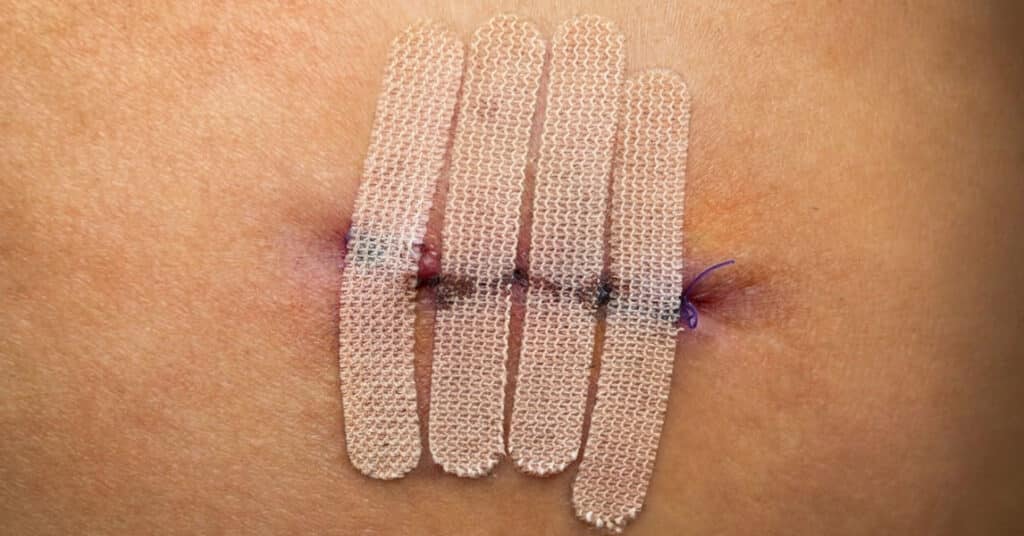
Paper Taping
Medical adhesive strips or paper tape over the incision:
- Keep the scar supported and reduce micro-movement
- Are especially helpful for chest, shoulder, and joint scars
- Should be applied consistently for at least 12 weeks
- Can be combined with silicone products
Early Intervention with Injections
For very high-risk patients, Smart Skin Dermatology may add early, low-dose intralesional corticosteroid injections at the first signs of:
- Thickening of the scar
- Persistent itching or burning
- Redness that isn’t resolving
- Elevation above the surrounding skin
Waiting for a full keloid to form before intervening is far less effective than early treatment.
What to Avoid
Skip aggressive scar massage in anyone with a known tendency to keloids. While gentle massage can help some scars, repeated deep rubbing can increase inflammation and worsen raised scarring in keloid-prone individuals.
Warning Signs That Need Attention
Contact your dermatologist promptly if you notice:
- New nodules forming at the incision
- Persistent pain or burning
- Rapid elevation of the scar beyond the original wound
- The scar spreading beyond where the incision was made
Don’t take a “wait and see” approach—timely intervention prevents keloid recurrence far more effectively than treating established keloids.
Advanced Prevention Options for Very High-Risk Patients
For patients who have already had keloids from prior surgeries or who have large, symptomatic keloids elsewhere on the body, Smart Skin Dermatology employs more intensive prevention strategies.
Intralesional Corticosteroid Injections
Steroid injections remain a cornerstone of keloid prevention:
- Triamcinolone acetonide at 10–40 mg/mL
- Given every 4–6 weeks during the first 3–6 months post-op
- Start when the scar first shows signs of thickening
- Dampen inflammation and suppress excessive collagen production
Side effects like dermal atrophy (thinning) and telangiectasia (visible blood vessels) occur in about 10% of cases, requiring skilled administration.
Combination Therapies
When prior keloids have been particularly resistant, combining corticosteroid injections with other modalities improves outcomes:
| Combination | Benefit |
| Corticosteroids + 5-fluorouracil | Enhanced anti-fibrotic effect |
| Corticosteroids + pulsed-dye laser | Targets both inflammation and vascularity |
| Silicone + verapamil injections | Studies show 90% reduction in recurrence |
| Corticosteroids + cryotherapy | Effective for smaller lesions |
Radiation Therapy
In carefully selected adult patients with previous severe keloids:
- Low-dose postoperative radiation immediately after surgical removal of a known keloid
- Delivered within 48 hours (boosts success from 56% to 75–76%)
- Reserved for recalcitrant cases due to long-term considerations
- Not appropriate for children or pregnant women
This approach is individualized and not used for every scar.
Pressure Therapy
Pressure garments or custom pressure earrings can be prescribed after procedures on:
- Earlobes (earlobe keloids are particularly common after piercings)
- Jawline
- Chest
These work by reducing blood flow and tension in healing wounds, applied for 12–24 hours daily over 4–6 months.
Emerging Treatment Options
Newer approaches under investigation include:
- Adipose tissue transplantation for scar modulation
- Topical imiquimod 5% cream to modulate immunity
- Liposome-encapsulated interferon creams
- Bleomycin injections (outperforming steroid-cryotherapy for keloids >100 mm²)
These options represent part of a long-term prevention plan designed jointly by your surgeon and an experienced dermatologist.
Daily Habits That Support Better Scar Healing

What you do at home over many months is often as important as what happens in the operating room. Small, consistent actions add up to better outcomes.
Consistent Sun Protection
For at least the first year after surgery:
- Apply SPF 30+ sunscreen to the scar whenever it’s exposed
- Use sun-protective clothing over surgical sites
- Avoid tanning beds completely
- Remember that UV exposure can darken and visually thicken scars
Maintain Stability
- Keep a stable, healthy weight
- Avoid activities that repeatedly stretch the scar (especially early intense workouts targeting chest or shoulder muscles after surgery in those regions)
- Build back to exercise gradually with surgeon approval
Skin Hydration
- Use a simple, non-irritating moisturizer around (not directly on open incisions) once cleared by your surgeon
- Well-hydrated skin tolerates movement better
- Hydrated skin may itch less, reducing scratching and micro-trauma
Avoid Additional Trauma
For anyone prone to keloids:
- Avoid new elective piercings near the surgical area for at least several months
- Skip tattoos in or around the healing scar
- Postpone additional cosmetic procedures in the region
Small Choices Matter
The everyday decisions that support better healing:
- Wear soft fabrics that don’t irritate the scar
- Don’t pick at scabs or healing tissue
- Adhere to all follow-up appointments
- Sleep in positions that don’t put pressure on healing surgical scars
[IMAGE – Lifestyle]
When to See a Dermatologist During Healing
Early specialist input can often convert a “borderline” scar into a flat, comfortable one instead of a lifelong keloid. Knowing when to seek help is crucial.
Red-Flag Symptoms
Contact a dermatologist promptly if you notice:
- A scar that becomes thicker and harder (rather than softer) after the first 6–8 weeks
- The scar spreading beyond the original incision
- Persistent burning or itching that doesn’t improve
- Nodules forming at the ends of the incision (“claw-like” projections)
- Changes in scar texture that seem to be worsening
Recommended Follow-Up Schedule
Smart Skin Dermatology typically recommends:
- Follow-up every 3–4 months for at least 12–18 months
- More frequent visits for patients with history of multiple keloids
- Closer monitoring for surgery in especially high-risk areas
What Happens at Follow-Up Visits
During these visits, the dermatologist assesses:
- Scar tension and flexibility
- Color changes (redness, hyperpigmentation)
- Symptoms (itching, pain, sensitivity)
- Early signs of thickening or elevation
Based on this assessment, the plan may be adjusted with measures like:
- Starting or intensifying silicone use
- Adding or modifying taping protocols
- Beginning or continuing injections
- Adding laser treatments for vascular changes
Be Prepared
Bring photos of any previous keloids and share details about:
- How you healed after earlier injuries or piercings
- Family history of keloids or abnormal scars
- Previous treatment options you’ve tried
This information helps tailor prevention strategies to your specific situation.
It is never “bothering the doctor” to ask about a scar that feels wrong. Timely consultation is one of the most powerful prevention tools available.
How Smart Skin Dermatology Helps Prevent Post-Surgical Keloids
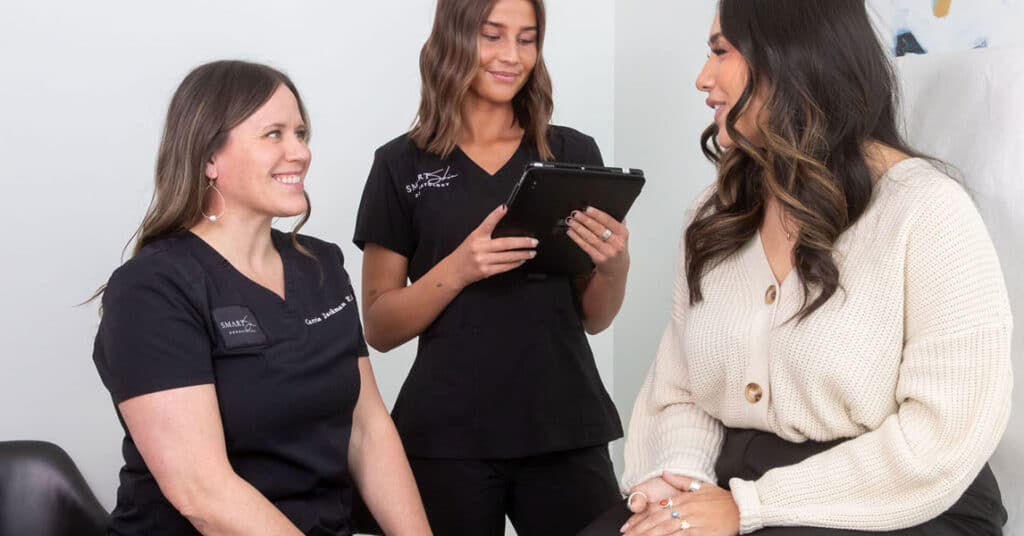
At Smart Skin Dermatology, preventing keloid formation is a core focus of our scar management practice. Our experience spans the full range of high-risk situations.
Who We See
We commonly work with patients both before and after procedures including:
- Breast surgery and reconstructive surgery
- C-sections
- Orthopedic shoulder surgery
- Facial operations on the jawline, chin, and ears
- Revision surgery for existing keloids
Our Approach
Smart Skin Dermatology builds individualized keloid prevention plans that include:
- Pre-operative risk assessment: Detailed history of previous scars, family keloid history, and skin type evaluation
- Surgeon coordination: Communication with your surgical team about incision planning and closure techniques
- Structured postoperative visits: Regular monitoring of scar evolution with adjustments as needed
Treatment Options We Offer
Our services span both conservative and medical approaches:
| Conservative Options | Medical Procedures |
| Silicone gel and silicone sheets | Intralesional corticosteroid injections |
| Medical-grade taping | Combining corticosteroid injections with 5-FU |
| Pressure therapy devices | Laser therapy for vascular changes |
| Scar-specific topicals | Cryotherapy for select lesions |
For Existing Keloids
For patients who already have keloids, we can discuss:
- Treat keloids with multimodal approaches
- Strategies to reduce keloid recurrence after any future surgeries
- Long-term maintenance plans
Getting Started
If you’re planning surgery and worried about keloids, contact Smart Skin Dermatology before your procedure. Prevention is most effective when it begins early—ideally before the first incision is made.
Whether you have sensitive skin, a history of keloid growth, or simply want to minimize scarring from an upcoming procedure, early consultation gives you the best chance at a flat, comfortable result.
Schedule your consultation today at Smart Skin Dermatology.
Frequently Asked Questions About Preventing Keloids After Surgery
If I have had a keloid from an ear piercing, does that mean I will definitely get keloids after surgery?
A prior keloid is a strong risk factor but not a guarantee. Your body’s response to one type of skin injury doesn’t always predict its response to another. However, these patients should absolutely be treated as high-risk. You benefit most from pre-surgical planning, tension-reducing closure techniques, early silicone use, and close dermatology follow-up. With proper prevention measures, many patients with a history of earlobe keloids go on to heal well from necessary surgeries.
How long should I continue silicone gel or sheets on my surgical scar?
Most high-risk patients should use silicone consistently for at least 2–3 months. Many benefit from continuing up to 6–12 months, especially for chest, shoulder, and joint scars where scars tend to take longer to mature. The key is daily, long-term use rather than short trials. Wearing silicone sheets for just a few hours occasionally won’t deliver the same results as consistent 12–24 hour daily application over months.
Can I massage my surgical scar to prevent stiffness, or will that increase my keloid risk?
Gentle scar massage can help some scars become more pliable, but it may aggravate keloid-prone skin if done too early or too aggressively. For known keloid formers, only start massage after the incision is fully healed and only under guidance from your surgeon or dermatologist. Avoid deep, forceful rubbing—this can increase chronic inflammation and stimulate the fibroblast activity that drives keloid formation. Light, gentle strokes are preferable if massage is recommended at all.
Are there vitamins or over-the-counter creams that reliably prevent keloids?
No supplement or cream has been proven to reliably prevent keloids on its own. While good nutrition supports the body’s healing process, and vitamin E is often marketed for scars, evidence for these approaches is weak compared to mechanical and medical strategies. The strongest evidence supports proper wound care, silicone products, taping, tension reduction, and early injections when needed. That said, basic skin health measures—good nutrition, not smoking, and sun protection—still matter for your natural skin tone and overall healing capacity.
How long after surgery can a keloid still develop?
Keloids may begin to appear several months after surgery and can continue to thicken for a year or more. Unlike hypertrophic and keloid scars that typically show improvement within 6–18 months, true keloids often keep growing without intervention. This is why Smart Skin Dermatology recommends monitoring scars for at least 12–18 months after surgery. If a scar starts to grow, spreads beyond the original wound, or becomes more symptomatic over time, seek evaluation promptly rather than assuming it will resolve on its own.

Caitlin Brewer, APRN FNP-C, MSN, is a board-certified Family Nurse Practitioner with a passion for helping patients achieve their dermatologic goals. She believes in creating a supportive and collaborative environment where patients feel heard and empowered to take an active role in their skin health. With a background that includes extensive experience in various medical settings, Caitlin brings a well-rounded and compassionate approach to patient care.