How Long Will Contact Dermatitis Last?

If you’re dealing with an itchy rash caused by something your skin touched, you’re probably wondering exactly how long this discomfort will stick around. The answer depends on a few key factors, but here’s what you can generally expect.
Quick Answer: How Long Does Contact Dermatitis Last?
For most people, mild cases of contact dermatitis start improving within a few days once the trigger is completely removed. With proper care and no further exposure, the rash typically clears fully within two to four weeks.
However, how long contact dermatitis lasts varies based on whether you’re dealing with irritant or allergic types of contact dermatitis, the severity of your skin reactions, and whether you’ve truly identified and avoided the rash causing substance. If your contact dermatitis rash keeps returning, persists beyond a month, or gets worse instead of better, it’s time to schedule an evaluation at Smart Skin Dermatology in Lehi, Utah.
The good news: contact dermatitis is not contagious and poses no life-threatening risk. With the right approach, you can treat contact dermatitis successfully and get back to comfortable skin.
Understanding Contact Dermatitis
Contact dermatitis is an itchy rash that develops when your skin reacts to direct contact with an irritating or allergy-triggering substance. The skin inflammation shows up right where the exposure happened, creating redness, swelling, and discomfort in the affected area.
Common symptoms of contact dermatitis include:
| Symptom | Description |
| Redness | Pink to deep red skin discoloration |
| Severe itching | Persistent urge to scratch |
| Dryness | Rough, scaly skin texture |
| Burning | Stinging or heat sensation |
| Blisters | Small fluid-filled bumps |
| Oozing/crusting | Weeping that dries into scabs |
For Utah patients, everyday triggers include poison ivy or oak encountered on local hikes, fragrances in lotions and personal care products, nickel in jewelry or belt buckles, and harsh soaps or cleaning products used at home or work.
The rash initially appears only on the exposed area—under a watchband, along a bra strap, on hands after cleaning, or on eyelids from makeup. This localized pattern is one way to recognize how contact dermatitis shows itself differently than other skin conditions.
Irritant vs. Allergic Contact Dermatitis
Understanding the two main types helps explain why contact dermatitis healing times differ so significantly between people.
Irritant contact dermatitis accounts for roughly 80% of cases. This nonallergic skin reaction occurs when substances directly damage the skin’s outer protective layer. Common culprits include solvents, rubber gloves, bleach, detergents, sanitizers, and frequent wet work like constant handwashing.
Irritant reactions typically appear quickly (within minutes to hours), feel more like burning or stinging than itching, and often present as dry, cracked, or chapped skin—especially on hands. Cosmetologists, health care workers, florists and food service workers florists face this type frequently due to occupational exposures.
Allergic contact dermatitis makes up the remaining 20% and involves an immune reaction to specific allergens. This includes burning poison ivy (urushiol oil), nickel, fragrances, hair dyes, and certain preservatives like those found in antibiotic creams balsam.
With allergic reactions, you typically notice symptoms 12-48 hours after contact, experience intense itching rather than just burning, and may see the rash spread slightly beyond the exact contact zone. Allergic contact dermatitis occurs because your immune system overreacts to a substance it has become sensitized to—sometimes from a single exposure weeks earlier.
Because allergic variants require the immune response to fully subside, these rashes often persist longer than irritant forms. Some individuals experience both irritant and allergic reactions simultaneously, which can extend flares and increase recurrence risk.
Why the Duration Varies
There’s no universal timeline for how long contact dermatitis lasts because multiple factors determine your healing speed.
Type matters significantly. A nonallergic skin reaction from soap irritation may resolve in days once you stop using the product. An allergic reaction to nickel or poison ivy requires your activated immune cascade to calm down, which takes considerably longer.
Severity directly impacts duration. Mild cases with skin redness and slight dryness heal faster than severe cases involving widespread blisters, intense swelling, itchy rash, or leathery patches from chronic scratching.
Location affects perception. Thin, sensitive skin areas like eyelids, face, and genitals absorb more of the irritating substances and may appear worse even when healing is progressing normally. These areas can feel like they’re lasting longer due to heightened visibility and discomfort.
Underlying conditions extend healing. People with atopic dermatitis, extremely dry skin, or a weakened skin barrier often experience more severe and prolonged flares. If your skin’s outermost layer is already compromised, recovery takes additional time.
Consider the contrast: a mild soap irritation on a mechanic’s hands might improve within 72 hours of switching products, while a severe poison ivy outbreak after a weekend hiking in the mountains could require 3-4 weeks to fully clear.
The Healing Timeline: What to Expect
These timeframes assume you’ve successfully identified and stopped all contact with the trigger.
Mild irritant contact dermatitis:
- Improvement often begins within 24-72 hours
- Skin may feel dry or slightly rough for 1-2 weeks as the barrier regenerates
- Full resolution typically within 2 weeks
Mild to moderate allergic contact dermatitis:
- Itching and redness typically starts to ease within 3-7 days
- Most rashes clear in 2-4 weeks
- Post-inflammatory discoloration may linger 4-8 weeks, particularly in brown or black skin
Severe reactions (widespread blisters, chemical exposure, facial or genital involvement) can take 3-4 weeks or longer without proper treatment.
Health care workers, cleaners, and service industry employees who face daily exposures often feel like their rash is “constant.” That’s because repeated exposure keeps restarting the inflammation cycle before healing completes.
Even after visible improvement, your skin barrier remains fragile for several weeks. Regularly applying moisturizing lotions and avoiding potential allergens during this period helps prevent contact dermatitis from spreading into a recurring problem.
When It Lasts Longer Than Expected
If you see no improvement after 7-10 days of strict avoidance and home care, or if symptoms persist beyond 4 weeks, something is preventing normal healing.
Ongoing exposure is the most common culprit. The contact dermatitis vary widely in how sneakily triggers hide:
- Still using scented laundry detergent or dryer sheets that embed allergens in clothing
- Wearing the same nickel-containing jewelry, watch, or belt buckle daily (cover metal fasteners with clear nail polish as a temporary barrier)
- Using products labeled “hypoallergenic” that still contain fragrances or preservatives you react to
- Workplace exposures not fully blocked by protective clothing or gloves (some allow 10-20% penetrance)
- Even goggle contact dermatitis can occur from rubber or adhesive components
Secondary infection is the second major reason rashes stall. When scratching breaks the skin, bacteria enter and colonize. Watch for these warning signs requiring immediate medical care:
- Pain increasing rather than just itch
- Warmth and thicker crusts
- Yellow drainage, pus, or honey-colored scabs
- Spreading redness or red streaks
- Fever above 100.4°F
Contact dermatitis contagious concerns are unfounded—you cannot spread it to others. However, without addressing infection or re-exposure, what should be a 2-4 week problem can stretch into months and potentially cause white skin bumps or permanent texture changes.
If the rash involves your nasal passages from airborne irritants, or if medical or dental procedures exposed you to latex or metals, patch testing may be necessary to diagnose contact dermatitis properly.
How to Help Contact Dermatitis Heal Faster at Home
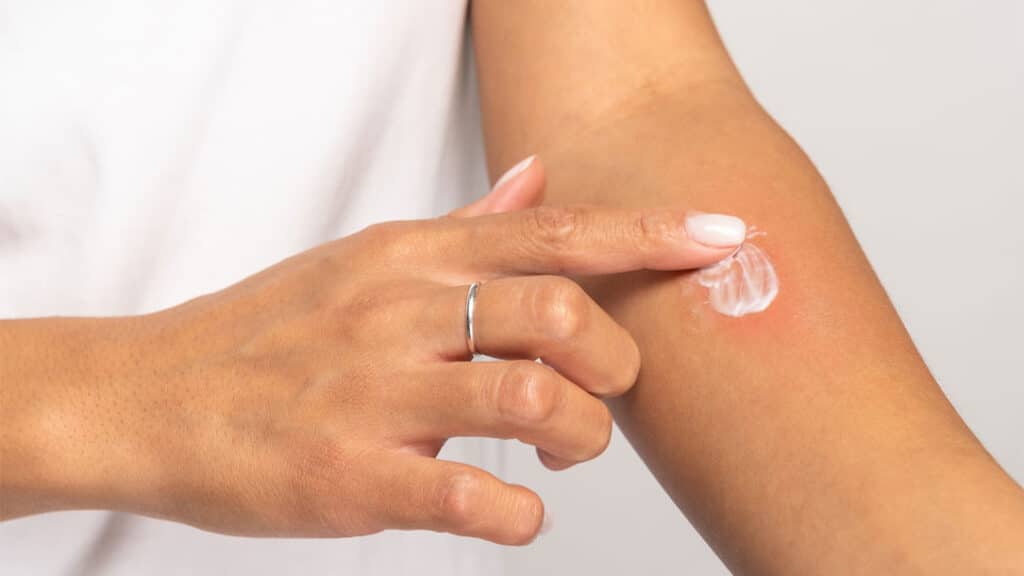
Home care works best once the trigger has been removed. Following these steps can reduce itching and shorten overall duration.
Do not scratch. This is the single most important rule. Scratching tears skin, triples infection risk, and prolongs healing. Keep nails short and consider cotton gloves at night if needed.
Effective comfort measures:
| Method | How It Helps |
| Cool compresses | Apply for 10-15 minutes several times daily to reduce itching and skin irritation |
| Colloidal oatmeal baths | Use store-bought packets for widespread rashes; reduces itch scores by up to 40% |
| 1% hydrocortisone cream | Apply to small areas twice daily for up to 7 days (avoid face/genitals without guidance) |
| Calamine lotion | Helps relieve itching and dry oozing blisters, especially for poison ivy |
| Barrier cream | Thick fragrance-free ointments or petrolatum restore the skin’s outer layer |
What to avoid: Harsh soaps, exfoliating scrubs, essential oils, and heavily fragranced products that may worsen skin immediately upon contact.
A nonprescription skin cream with ceramides can help keep skin supple and support healing. Non-drowsy oral antihistamines may help with itch but don’t directly treat the inflammation.
To prevent contact dermatitis recurrence, wear protective clothing when handling known irritants and apply barrier cream before potential exposures.
When to See a Dermatologist
Professional contact dermatitis treatment can significantly shorten recovery and prevent systemic contact dermatitis or chronic patterns from developing. Photoallergic contact dermatitis and other complex presentations especially benefit from expert evaluation.
Schedule with Smart Skin Dermatology if:
- The rash is severe, painful, or covers large body areas
- It affects face, eyelids, lips, or genitals
- Signs of infection appear (fever, pus, spreading redness)
- No improvement after 7 days of proper treatment and strict avoidance
- You cannot identify the trigger or keep flaring in the same spot
- You develop contact dermatitis after topical medications or occupational exposures
A dermatologist can confirm your diagnosis, rule out mimics like eczema or fungal infections, prescribe stronger topical steroids, provide oral medication for severe cases, and arrange a patch test to pinpoint specific allergens.
Your visit may include reviewing all products you use, discussing work and hobby exposures, physical examination, and creating a personalized prevention plan using barrier cream and avoidance strategies.
Contact Smart Skin Dermatology to schedule your appointment today.

Nicole Heaps is a board-certified Family Nurse Practitioner with over 15 years of medical experience, specializing in both medical and cosmetic dermatology. Her approach to skincare is rooted in a deep understanding of the connection between clinical health and personal confidence. Nicole is dedicated to helping her patients achieve their best skin through a blend of advanced medical treatments and evidence-based aesthetic procedures.