
How to Restore Collagen in the Face

If you’ve noticed fine lines deepening, cheeks looking a bit deflated, or your jawline losing its definition, you’re likely experiencing what happens when collagen production decreases over time. The good news? You can take meaningful steps to restore collagen in the face and rebuild what time and sun exposure have taken away.
This guide breaks down exactly what works, what doesn’t, and how to create a plan that fits your skin, your budget, and your goals.
Quick Answer: The Most Effective Ways to Restore Facial Collagen
Here’s the truth: you cannot fully replace all the collagen you’ve lost since your twenties. However, you can significantly stimulate collagen production, protect existing collagen fibers, and improve the overall quality of your skin’s structure. The science supports this, and the results can be genuinely visible.
The three fastest, most evidence-based strategies for restoring facial collagen are:
- Prescription-strength retinoids (tretinoin, adapalene) that boost collagen synthesis at the cellular level
- In-office procedures like microneedling, laser resurfacing, and radiofrequency treatments that trigger wound healing responses
- Rigorous sun protection to prevent ongoing collagen degradation
Secondary support comes from:
- A healthy diet rich in protein, vitamin c, and antioxidants
- Lifestyle modifications (no smoking, quality sleep, stress management)
- Oral collagen supplements, which show modest but measurable benefits
Which options give faster results?
- Quicker visible results: Hyaluronic acid fillers (immediate), biostimulatory injectables like poly l lactic acid (3-6 months), ablative lasers (weeks to months)
- Slower, gradual results: Topical retinoids (3-6 months), collagen peptides supplements (8-12 weeks), diet and lifestyle changes (ongoing)
A realistic plan for most people combines daily skincare with active ingredients, healthy habits that preserve collagen, and periodic professional treatments tailored to your age, skin type, and budget.
What Is Collagen and How Does It Affect Your Face?
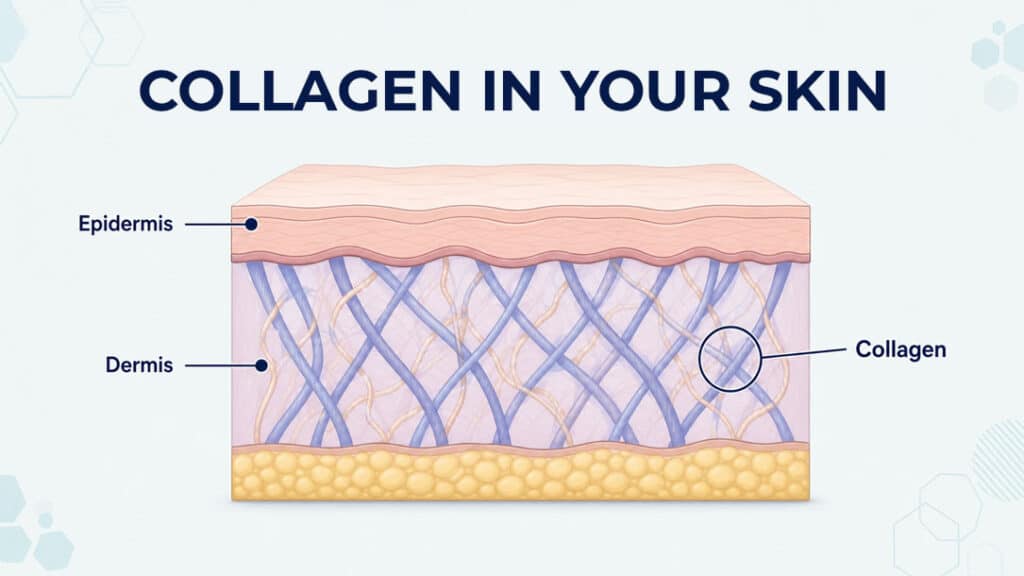
Collagen is the most abundant protein in the human body, making up approximately 75-80% of your skin’s dermis and about 30% of your total body protein. Think of collagen as the scaffolding beneath your skin’s surface—the structural framework that keeps everything in place.
Here’s what you need to know about how collagen works in your face:
- Types I and III dominate facial skin: Type I collagen provides tensile strength and constitutes about 80-90% of dermal collagen, while type III offers flexibility and is more prevalent in younger skin
- Collagen lives in the dermis: This middle layer of skin sits between the surface (epidermis) and the fat and muscle below, acting as the mattress springs beneath the fabric of your skin
- It works as a team: Collagen fibers partner with elastin (for bounce-back) and hyaluronic acid (for hydration) to maintain firmness, elasticity, and that plump, youthful appearance
- Organization matters: When collagen bundles are dense and well-organized, skin looks smooth and pores appear smaller; when they fragment and scatter, pores look larger and sagging skin becomes visible
- It supports everything above and below: Healthy collagen in the face maintains cheek volume, sharp jawlines, and the smooth contours that define a youthful face
The connective tissue network that collagen creates isn’t just about wrinkles—it affects how your entire face holds its shape over time.
Why Facial Collagen Declines With Age
Collagen production starts declining around the mid-20s at a rate of approximately 1-1.5% per year. After 35-40, this decline accelerates, and the visible signs become increasingly difficult to ignore.
Several factors drive collagen loss:
- Intrinsic aging: Genetics, hormonal changes (particularly the estrogen drop women experience during perimenopause and menopause in the mid-40s to early 50s), and the natural aging of fibroblasts—the skin cells responsible for producing collagen
- UV exposure: Chronic sun exposure is the single biggest external contributor to collagen breakdown, triggering photoaging that fragments existing collagen fibers faster than the body’s ability to repair them
- Environmental stressors: Pollution, smoking, and vaping generate free radicals that attack collagen structure
- Dietary factors: High-sugar diets cause glycation, where excess glucose binds to collagen proteins, making them stiff and prone to breakdown—too much sugar literally ages your skin from the inside
- Lifestyle issues: Poor sleep, chronic stress, and elevated cortisol levels impair your body’s natural collagen production and repair mechanisms
What collagen loss looks like by decade:
- 30s: Fine lines appear, especially around eyes and mouth
- 40s: Deeper nasolabial folds develop, early volume loss in cheeks
- 50s+: Jawline sagging, thinning skin, noticeable volume loss throughout the midface
While you cannot stop the clock entirely, early and consistent intervention significantly slows these visible signs of skin aging.
Can You Really Restore Lost Collagen in the Face?
Let’s set realistic expectations: “restore” means stimulating new collagen production and improving the quality of existing collagen fibers—not literally replacing all the collagen you had at eighteen.
Complete reversal to teenage collagen levels is not medically possible with current science. However, significant improvement is absolutely achievable.
Understanding the distinction between different approaches helps:
- Boosting collagen synthesis: Retinoids, vitamin c serums, and professional procedures signal fibroblasts to produce collagen and lay down new collagen fibers
- Protecting existing collagen: SPF, antioxidants, and lifestyle changes prevent ongoing collagen breakdown
- Replacing volume: Dermal fillers and fat grafting add volume where it’s been lost, though they don’t always stimulate new natural collagen
Results depend on several factors:
- Your age and how much collagen loss has already occurred
- Your skin type and Fitzpatrick classification
- The depth of sun damage and other environmental damage
- How consistently you follow your regimen
Typical timelines for results:
- Topical treatments: 3-6 months for visible improvement
- Microneedling and non-ablative lasers: Several months for maximal collagen remodeling
- Biostimulatory injectables: 3-6 months as new collagen develops
- Hyaluronic acid fillers: Immediate volume, but less collagen stimulation
The realistic goal is smoother, firmer, more elastic skin with improved skin elasticity—not magically erasing every line you’ve earned over decades of living.
Topical Skincare That Stimulates Facial Collagen
Certain active ingredients are clinically proven to increase collagen production or reduce its breakdown when used consistently over time. Topical strategies work best for mild to moderate collagen loss and serve as essential long-term maintenance between professional treatments.
Daily sunscreen is non-negotiable. Broad-spectrum SPF 30+ is the single most important topical for preserving collagen and preventing further collagen degradation. Everything else you do is undermined without it.
Here’s your evidence-based topical toolkit:
- Retinoids (gold standard): Prescription tretinoin (0.025-0.1%), adapalene, or retinaldehyde stimulate collagen production by increasing fibroblast activity. Studies show topical retinoids can upregulate collagen genes by 20-80% over 6-12 months. Visible improvement typically appears after 3-6 months of regular use.
- Vitamin C serums: 10-20% L-ascorbic acid or stabilized derivatives support collagen synthesis and protect against free radical damage. Best used in the morning under sunscreen to maintain overall skin health.
- Peptides: Signal peptides like palmitoyl pentapeptide-4 (Matrixyl) mimic growth factors and may help signal fibroblasts to produce more collagen. They’re supportive rather than transformative.
- Growth factor and exosome serums: Advanced options with promising but still-emerging data. More expensive, with variable results depending on formulation.
A simple, effective routine:
| Time | Steps |
| AM | Vitamin C serum → Moisturizer → SPF 30+ |
| PM | Cleanser → Retinoid → Moisturizer |
Important: Start slowly with retinoids to minimize irritation. Begin with 2-3 nights per week, then increase frequency as your skin tolerates it. Collagen creams containing large collagen molecules (over 500 Da) cannot penetrate the skin effectively—don’t waste money on products claiming to “replace” collagen topically.
Professional Treatments That Rebuild Collagen in the Face
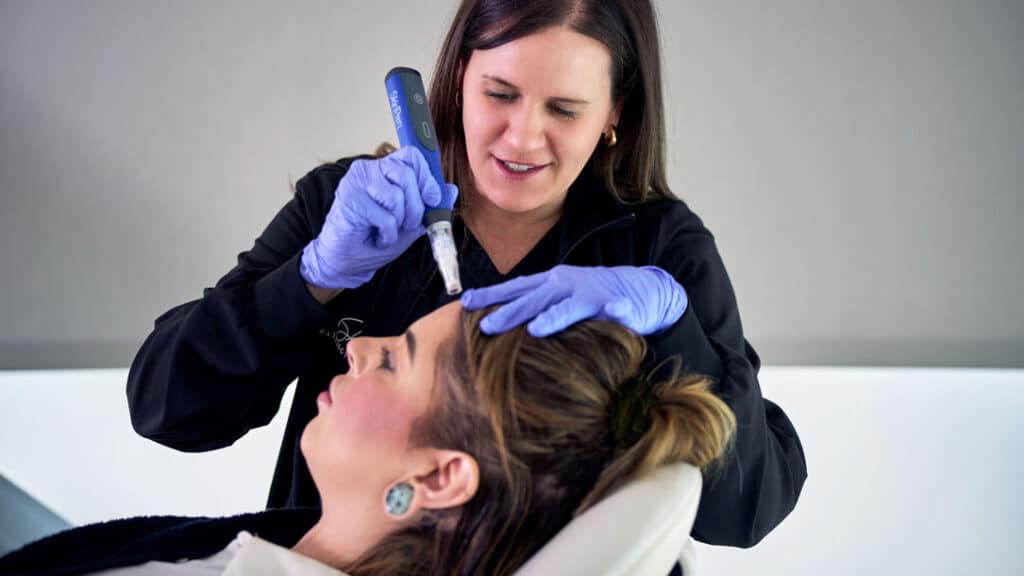
In-office procedures trigger a controlled wound healing response that prompts fibroblasts to lay down new collagen in the dermis. These cosmetic treatments are particularly effective for moderate to advanced signs of aging, acne scarring, and skin laxity.
Results from professional treatments evolve over 3-12 months as collagen growth and remodeling occur beneath the surface.
Microneedling (Collagen Induction Therapy)
A device with fine needles (0.5-2.5 mm) creates hundreds of micro-injuries per square centimeter. This triggers the wound healing cascade, stimulating fibroblasts, improving vascularity, and supporting natural collagen production.
- Protocol: Typically 3-6 sessions spaced 4-6 weeks apart
- Best for: Texture improvement, fine lines, mild laxity, acne scars
- Downtime: 1-3 days of redness
Two main categories exist:
- Non-ablative lasers (fractional erbium, Nd:YAG): Less downtime (3-7 days redness), gradual collagen stimulation, safer for various skin tones
- Ablative lasers (CO2, Er:YAG): More dramatic collagen remodeling, 1-2 weeks of crusting and recovery, higher risk of hyperpigmentation in darker skin types (Fitzpatrick IV-VI)
Radiofrequency (RF) and RF Microneedling
Controlled heat delivery to the dermis (reaching 50-65°C) causes immediate collagen contraction and stimulates new collagen formation over months. A 2019 study showed type I collagen increased from baseline 65.8% to 81.2% at 3 months post-treatment.
Devices like Morpheus8 combine insulated microneedles with bipolar RF for precise energy delivery at depths up to 4-8 mm.
- Best for: Jawline tightening, cheek laxity, skin texture, acne scars
- Protocol: 3-4 sessions for optimal results
- Downtime: Minimal to moderate redness
High-Intensity Focused Ultrasound (HIFU)
Devices like Ultherapy target deeper layers including the SMAS (the same layer addressed in facelifts), providing lifting effects to the lower face and neck.
- Results timeline: Collagen rebuilding over 3-6 months
- Best for: Brow lifting, jawline definition, neck tightening
Platelet Rich Plasma (PRP)
Platelet rich plasma derived from your own blood is concentrated to 4-6x baseline platelet levels. Growth factors like PDGF and TGF-β enhance collagen regeneration when injected alone or combined with microneedling.
- Results: Consistent texture and luminosity gains at 4-6 weeks
- Patient satisfaction: 70-80% report improvements
- Best as: An adjunct treatment rather than standalone
Critical consideration: Always choose a board-certified dermatologist or qualified aesthetic physician. Protocols must be customized based on skin tone to avoid complications like post-inflammatory hyperpigmentation, especially in Fitzpatrick IV-VI skin types.
Injectables: Fillers and Biostimulators for Collagen and Volume
Not all injectables work the same way. Some primarily add volume instantly, while others are biostimulatory and encourage your body’s ability to make more collagen over time. Understanding this distinction helps you choose the right approach.
Hyaluronic Acid Fillers
These gel-like products restore lost volume in cheeks, lips, and nasolabial folds immediately. While they primarily provide instant plumping, mechanical stretching of fibroblasts can secondarily support collagen.
- Duration: 6-18 months depending on product and placement
- Best for: Immediate volume restoration, lip enhancement, under-eye hollows
A true collagen biostimulator that triggers fibroblasts to generate new natural collagen over months. Clinical trials show:
- 67.6% wrinkle severity improvement at 52 weeks
- 90.57% midfacial volume gain at 12 months
- 95% skin glow maintenance at 2 years
- Protocol: 2-4 sessions spaced 4-6 weeks apart
- Duration: Up to 2+ years
- Best for: Gradual, natural-looking volume restoration, cheek hollowing
Calcium Hydroxylapatite (Radiesse)
Provides immediate structural support plus delayed collagen stimulation as the CaHA microspheres integrate into tissue.
- Duration: Approximately 12-15 months
- Best for: Cheek augmentation, jawline contouring, hand rejuvenation
Collagen Replacement Therapy
Products like Bellafill contain bovine collagen with polymethylmethacrylate microspheres for long-lasting results.
- Duration: Up to 5 years
- Consideration: Requires allergy testing for animal-derived collagen
- Best for: Acne scars, deep nasolabial folds
Important: Injectables should only be performed by experienced injectors who understand facial anatomy. Complications like vascular occlusion or nodules (1-5% incidence with some biostimulators) can be minimized with proper technique and product dilution.

Diet and Supplements to Support Facial Collagen
While topical and procedural treatments target the skin directly, collagen levels are also influenced by what you eat and your overall nutritional status. Your body needs specific building blocks to produce collagen naturally.
Essential Nutrients for Collagen
Protein: Adequate daily protein (approximately 1.0-1.2 g/kg body weight for most adults) provides the amino acids—glycine, proline, and lysine—that form collagen fibers. Without sufficient amino acid content, your body cannot manufacture collagen regardless of what treatments you use.
Vitamin C: A critical cofactor for collagen cross-linking. Without adequate vitamin C, collagen synthesis literally cannot complete. Best sources include citrus fruits, berries, kiwis, bell peppers, and leafy greens.
Supporting nutrients: Zinc, copper, and antioxidants (vitamin E, carotenoids, polyphenols from berries, green tea, dark chocolate) help protect existing collagen fibers from oxidative damage.
Collagen Rich Foods
- Bone broth (contains collagen peptides directly)
- Fish with skin
- Chicken with cartilage
- Egg whites
- Citrus fruits and berries (vitamin C)
- Leafy greens
- Garlic and sulfur-rich vegetables
Oral Collagen Supplements
Hydrolyzed collagen peptides are broken down for easier absorption—about 90% of peptides under 3 kDa are absorbed. Meta-analyses show oral collagen supplements can provide 10-20% wrinkle reduction over 8-12 weeks.
Choosing supplements typically involves:
- Look for clearly labeled sources (marine or bovine)
- Select products tested for heavy metals
- Aim for 2.5-10 g collagen peptides per day based on published trials
- Understand that supplements typically work gradually
Important caveat: Collagen supplements are adjuncts, not substitutes, for medical or cosmetic treatments. Results vary between individuals, and they pale in comparison to in-office procedure yields.
Natural Lifestyle Changes That Help Rebuild and Preserve Collagen
Daily habits can either accelerate collagen breakdown or help maintain the collagen you’ve restored through skincare and procedures. These lifestyle factors matter more than most people realize.
Sun Protection
Direct sun exposure is the primary driver of collagen loss in the face. Protecting yourself means:
- Daily broad-spectrum SPF 30+ (even on cloudy days)
- Seeking shade between 10 a.m. and 4 p.m.
- Wearing hats and UV-protective sunglasses
- Understanding that preventing skin cancer also prevents accelerated aging
Eliminate Smoking and Vaping
Tobacco smoke and some vaping aerosols generate free radicals and reduce blood flow to the skin, dramatically speeding facial collagen loss. Smokers respond 20-30% less to collagen-stimulating treatments due to impaired fibroblast function. The wrinkling around the mouth and eyes in smokers is directly related to collagen degradation.
Control Glycation
Limiting frequent high-sugar, ultra-processed foods prevents excess glucose from binding to collagen proteins. These stiff, damaged proteins (advanced glycation end products, or AGEs) make maintaining skin elasticity nearly impossible.
Prioritize Sleep and Stress Management
Quality sleep (7-9 hours) and stress-reduction techniques help reduce cortisol surges that impair skin repair. When you sleep, your body produces collagen—chronic sleep deprivation literally prevents you from rebuilding what you’ve lost.
Exercise Regularly
Moderate exercise improves circulation and may support healthier skin and collagen maintenance throughout the human body. The increased blood flow delivers nutrients to skin cells more efficiently.
Facial Massage and Tools
Gentle, regular facial massage or tools like jade rollers and gua sha may improve microcirculation and lymphatic drainage. Evidence for direct collagen boosting is limited, but they’re low-risk supportive practices that can improve skin appearance temporarily. They help remove dead skin cells and may support supple skin over time.

How to Create a Personalized Facial Collagen Restoration Plan
Every face is different, and a one-size-fits-all approach rarely delivers optimal results. Creating your own plan starts with honest assessment and builds from there.
Start With Your Main Concerns
Ask yourself:
- Is your primary issue fine lines, or deeper folds?
- Are you dealing with a sagging jawline or overall volume loss?
- Is skin texture (pores, roughness) your biggest frustration?
- Do you have acne scarring that needs addressing?
Age-Based Framework
20s and early 30s: Focus on prevention
- Daily SPF without exception
- Start retinoids (over-the-counter or prescription)
- Vitamin C in the morning
- Establish good lifestyle habits
30s to 40s: Add light procedures
- Continue daily actives
- Consider microneedling or light chemical peels
- Non-ablative lasers for early texture concerns
- Possibly PRP for regenerative support
40s to 60s: Consider more intensive treatments
- RF or RF-microneedling for laxity
- Biostimulatory injectables like Sculptra for volume
- Ablative lasers if significant sun damage exists
- Combination approaches for synergistic results
Consult a Professional
A dermatologist or qualified aesthetic practitioner can perform a proper skin exam, assess your risk factors (history of keloids, hyperpigmentation tendency), and create a realistic treatment roadmap. They’ll help you avoid wasting money on treatments that won’t work for your specific situation.
Build a Layered Plan
| Layer | Frequency | Purpose |
| Daily home care | Every day | SPF + active ingredients (retinoid, vitamin C) |
| Professional treatments | Monthly/quarterly as needed | Boost collagen, address specific concerns |
| Annual reviews | Yearly | Adjust plan as skin and goals change |
Budget and Downtime Planning
Be realistic about what you can afford and how much recovery time your schedule allows. Some treatments require minimal downtime (light RF, microneedling), while others need 1-2 weeks of recovery (ablative lasers). Match treatment intensity to your life.
Total investment for comprehensive treatment can range from $2,000-5,000 over time, with maintenance touch-ups typically needed yearly as natural collagen production continues to slow, especially after age 50.
The empowering truth: Consistent, evidence-based steps can visibly improve skin elasticity, firmness, and texture at almost any age. You may not be able to turn back the clock entirely, but you can absolutely slow it down and improve skin elasticity in ways that make a real, visible difference.
Start where you are. Protect what you have. Build from there. Your skin will thank you.

Gracie is a Registered Nurse and Cosmetic Nurse Specialist with a deep-rooted history at Smart Skin Dermatology. Before earning her nursing degree, she spent four years working side-by-side with Dr. Smart as his personal Medical Assistant, gaining an intensive clinical foundation in skin health. After completing an elite cosmetic training and shadowing program under Dr. Smart’s mentorship, she now specializes in creating comprehensive, artistic treatment plans for her patients. Having experienced dermatology as a patient, a medical assistant, and now a provider, Gracie offers a unique 360-degree perspective that prioritizes patient education and natural, refined results.