When should you get moles checked
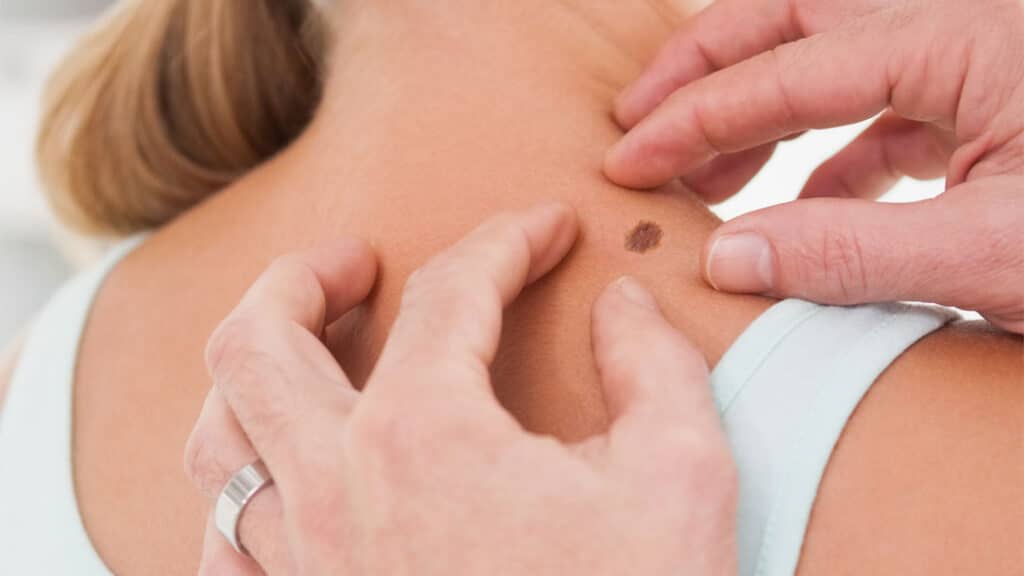
If you’re staring at a spot on your arm right now and wondering whether it’s worth a phone call to your doctor, this guide will help you decide. The short version: if something has changed, don’t wait.
Key Takeaways
- Act on changes, not perfection. Any mole that is itching, bleeding, growing, or changing color should be evaluated by a dermatologist.
- Know your triggers. The clearest reasons to book a mole check include ABCDE changes, an ugly duckling mole, physical symptoms like bleeding, and new moles appearing after age 30.
- Early detection saves lives. Melanoma caught while thin (under 1 mm) has a five-year survival rate around 99%. Once it spreads to distant organs, that number drops to roughly 35–52%.
- Every adult needs a baseline. Even if your moles look normal, one professional head-to-toe skin exam establishes what “normal” looks like for you, so future changes become more obvious.
- If in doubt, get it checked. Waiting “to see what happens next month” is the riskiest decision you can make when a mole is already changing in an obvious way.
Understanding Moles and Skin Cancer Risk
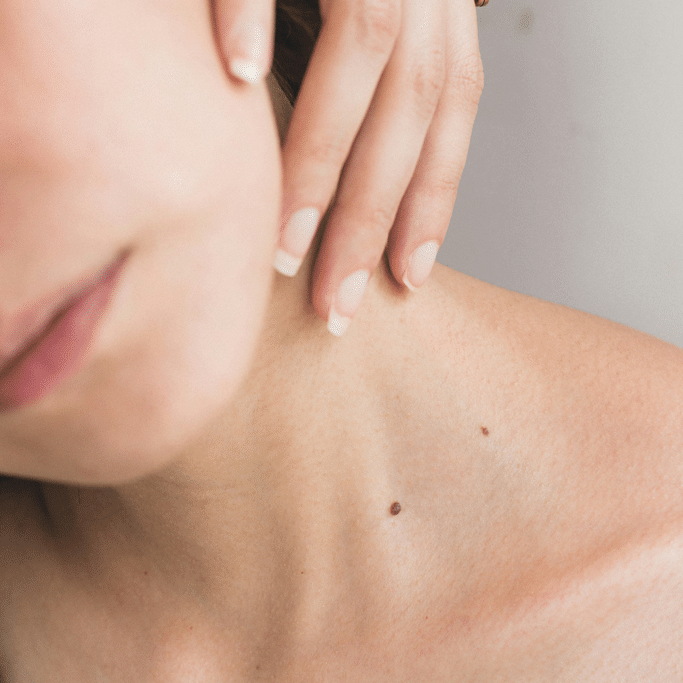
Moles are clusters of melanocytes, the cells that produce pigment in your skin. Most people have 10 to 45 moles on their body, and the majority appear during childhood and adolescence. Most moles are harmless and stay that way for a lifetime.
But not all of them. Some moles can become melanoma or other skin cancers over time, particularly atypical moles, which tend to be larger than common moles, have uneven borders, and contain multiple colors. While a single atypical mole rarely becomes cancerous, having many of them, known clinically as dysplastic nevi, raises your melanoma risk substantially.
What surprises most people is that melanoma can develop on any part of the body, including areas with limited sun exposure like the soles of your feet, under your nails, or between your toes. Melanoma can also arise from an existing mole or appear as a completely new spot. A personal or family history of skin cancer is one of the strongest risk factors that should lower your threshold for getting any mole checked. Family history of skin cancer alone doubles melanoma risk.
Why Every Adult Needs a Baseline Mole Check
Think of a baseline skin exam the way you think of a dental X-ray: it captures what “normal” looks like today so that any future deviation becomes immediately detectable. A dermatologist performs a one-time, professional, head-to-toe skin exam, documenting your visible moles, skin spots, and other skin lesions across your entire body.
Most adults should schedule this first full-body exam in their 20s or early 30s. If you have strong risk factors, such as fair skin with blistering sunburns, a history of skin cancer, or more than 50 moles, get it sooner. Patients with many moles or atypical moles benefit from baseline photos or total-body photography so subtle changes can be tracked between visits.
If you are an adult in 2026 and have never had a full skin exam, you are overdue. Schedule your baseline and give your dermatologist the context they need for early detection.
Beyond the ABCDE Rule: Trusting the “Ugly Duckling”
The ABCDE rule is endorsed by medical organizations worldwide as a framework for identifying potentially dangerous moles, but it is not the whole story. Knowing your own pattern of moles matters just as much.
The ABCDE framework works like this: A stands for Asymmetry in mole shape, structure, or color, where one half doesn’t match the other. B stands for Border Irregularity in mole edges, meaning jagged edges, scalloped, or blurred margins. C stands for Color Changes in moles with multiple colors or uneven shading, including brown, black, red, white, or blue areas within one lesion. D stands for Diameter of moles larger than 6 millimeters, roughly the size of a pencil eraser. E stands for Evolving moles that change over time in size, shape, color, or texture. Moles that evolve in size or shape should be checked immediately. Moles with irregular borders may signal early melanoma. A mole larger than six millimeters is concerning and warrants evaluation.
But here’s what textbooks often underemphasize: the “Ugly Duckling” sign. This refers to a mole that significantly differs from your other moles, whether it’s darker, lighter, larger, or simply a different shape than the rest. A study of 80 patients and over 2,000 moles found that using the ugly duckling approach helped dermatologists identify melanomas with high sensitivity while reducing unnecessary biopsies.
Instead of comparing your moles to stock photos online, compare each one to your other moles. If one doesn’t share the same shape or pattern, it’s an outlier. Trust your gut: if a mole’s appearance just feels “off,” that concern alone is a valid reason to book an appointment.
When Symptoms Mean You Need a Mole Checked Now
Physical symptoms in a mole are not normal. They should never be written off as irritation from clothing or dry skin. The three major warning symptoms that require an urgent appointment are: itching that doesn’t go away, bleeding (even once), or noticeable changes in size, shape, color, or texture over weeks to a few months.
Common warning signs also include spontaneous bleeding from any spot, pain, crusting, oozing, or a mole becoming raised when it used to be flat. If a mole develops any new symptoms over a short period, individuals should schedule professional skin cancer screening promptly. These changes should be treated as an early detection opportunity, not a “wait and see.”
Even long-standing lesions that have been on your skin for decades can turn dangerous. Changes in old moles deserve the same urgency as changes in new ones. Moles should be monitored for signs such as itching or bleeding at every self-check, and any suspicious mole that develops these symptoms should be evaluated immediately.
New Moles After Age 30: Why They Matter More
New moles are expected during childhood and the teen years. By about age 30 to 40, moles appearing on your body should slow or stop entirely. When new pigmented skin lesions show up after 30, they deserve more scrutiny.
Why? Because approximately 70 percent of melanomas start as a new mole rather than changes in an existing one. New moles appearing in adulthood warrant a visit to a dermatologist, especially if the spot appears quickly, looks different from your usual moles, or continues to grow or darken over weeks to months. New or suspicious changes in moles should prompt an immediate appointment with a dermatologist.
Adults with many moles, atypical moles, or a personal history of skin cancer should have an even lower threshold. Photograph new spots with a date stamp so your dermatologist can measure how fast they are changing between visits.
Melanoma Doesn’t Play Fair: Why Expert Eyes Matter
Melanoma is the most dangerous type of skin cancer because of its ability to invade deep tissue and metastasize. And it doesn’t always follow the rules. Some melanomas look small, symmetrical, and uniform in color. Nodular melanomas can appear as fast-growing bumps. Amelanotic melanomas may be skin-colored, invisible to the naked eye as anything alarming.
This is where expert eyes make the difference. Dermatologists use a dermatoscope, a handheld magnifier with polarized light, to see subsurface pigment networks and blood vessel patterns that no amount of squinting in a bathroom mirror can reveal. Years of training in pattern recognition allow them to spot potential warning signs and early melanoma that patients would overlook entirely.
Self examinations are essential, but they are not a substitute for professional skin cancer screening. Think of monthly self-checks as your early warning system and professional exams as the safety net that catches what you cannot see.
Who Is at Higher Risk and Should Get Moles Checked More Often?
Everyone can develop melanoma, but certain people face higher risk and need more frequent checks. Key risk factors include:
- Personal history of melanoma or other skin cancer
- Family history of melanoma (doubles your risk)
- Having over 50 moles, which increases skin cancer risk significantly, and you should see a dermatologist for monitoring
- Atypical moles or dysplastic nevi
- Fair skin, light eyes, or blonde hair, as fair skin increases the risk of melanoma significantly
- More than five sunburns double melanoma risk, including blistering sunburns
- Extensive sun exposure or tanning bed use
- Individuals over 50 are at higher skin cancer risk
- Weakened immune system from transplant or certain medications
High-risk individuals may need checks every 3 to 6 months. Skin examinations should be tailored according to individual risk factors. Even without obvious risk factors, any suspicious or changing mole still warrants a professional exam. Those with a personal or family history of developing skin cancer should discuss a personalized schedule with their dermatologist.
The Smart Skin Difference: What to Expect at a Professional Mole Check
A professional mole check is straightforward. Here’s what typically happens:
- Medical history review – your doctor asks about personal and family history of skin cancer, sun exposure habits, and any concerns about specific spots.
- Full-body skin exam – the dermatologist examines your entire body from scalp to soles, including ears, nails, palms, and between toes. Gowns and chaperones are available for comfort.
- Dermatoscope evaluation – suspicious skin spots get a closer look under magnified, polarized light to reveal signs of skin changes invisible otherwise.
- If a mole is concerning – your dermatologist discusses options, performs a small in-office biopsy under local anesthetic, and sends the sample to a lab for diagnosis.
A biopsy is a simple procedure, usually outpatient with minimal downtime. When problems are caught early, skin cancer excisions are often curative. Most patients describe the process as far less stressful than they expected.
How Often Should You Check Your Own Skin?
Your screening schedule should combine self-checks with professional exams:
| Risk Level | Self-Exams | Professional Exams |
| Average risk | Monthly at home | Every 1 to 2 years |
| Moderate risk | Monthly | Annually |
| High risk (many moles, family history, prior melanoma) | Monthly | Every 3 to 6 months |
Experts recommend monthly self-examinations regardless of professional screening schedules. Self-examine your skin for changes every three months at minimum, working through a pattern: front, back, sides, scalp, hands, feet, nails, and hard-to-see areas using a mirror or help from a partner. Annual dermatologist visits are recommended for most individuals, and annual skin checks are crucial for early cancer detection.
Keep a simple photo record of any moles that concern you. Note the date, location, and approximate size. This turns vague worry into useful data for your doctor.
Sun protection is part of prevention too: broad-spectrum SPF 30+, protective clothing, shade, and avoiding tanning beds all reduce your risk of skin cancer over time.
When Should You Get Moles Checked: Practical Scenarios
Scenario 1: You’re 42 and notice a new dark spot on your thigh with uneven color that’s been growing for several weeks. New mole after 30, evolving, color irregularity – schedule a dermatologist appointment this week.
Scenario 2: A mole on your shoulder has been there since high school, but recently it’s become itchy with occasional bleeding and its border has gone from sharp to blurry. Old mole changing with symptoms – get medical attention within days.
Scenario 3: You have more than 50 moles, several atypical ones, and a parent who had melanoma. During a self-check, one mole looks vastly different from the rest. Ugly duckling in a high-risk patient – call your dermatologist immediately.
These examples cover the main triggers: new moles after 30, changing moles of any age, symptoms like itching or bleeding, and any mole that looks or feels different from the rest.
If you’re asking yourself “Should I get this checked?” – the safest answer is almost always yes. Urgent concerns like rapid change, bleeding, or significant pain should prompt an appointment within days, not months. For everything else, book your check soon. Not someday. Soon. People of all skin types deserve this vigilance, and those with darker skin tones should pay particular attention to palms, soles, and nails where melanoma can hide.
When it comes to your skin health, vigilance is your best defense. If you notice any new, changing, or symptomatic moles—or if it’s simply time for your baseline skin exam—don’t wait to get professional advice. Early detection is key to preventing serious outcomes, and at Smart Skin Dermatology, our expert team is here to provide thorough, compassionate care tailored to your needs.
Schedule your appointment today at Smart Skin Dermatology and take the first step toward confident, proactive skin health.

Dr. Smart is a board-certified dermatologist at Smart Skin Dermatology, and is dedicated to helping patients achieve their healthiest, most radiant skin. Dr. Smart combines his extensive training with a genuine passion for helping others. He takes a patient-centered approach, listening carefully to your concerns and creating individualized treatment plans that address your unique needs and goals. Whether you seek to address a specific skin condition, enhance your natural beauty, or simply maintain healthy skin, Dr. Smart offers the expertise, experience, and compassion you deserve.
Frequently asked Questions
How quickly can a mole turn into melanoma?
Growth rates vary widely. Some melanomas change noticeably over just a few weeks, while others evolve slowly over years. If you spot a change between two monthly self-checks, that’s fast enough to warrant immediate evaluation. Waiting until next year when you can already see a difference is unsafe. Early detection at the irregular-mole stage often allows for simple surgical removal with excellent outcomes.
Is it normal for moles to appear during pregnancy?
Hormonal changes during pregnancy can cause existing moles to darken slightly, and small new moles may appear on the abdomen or breasts. However, any new or changing mole that follows ABCDE or ugly duckling patterns still deserves attention. It is safe to see a dermatologist and even have a biopsy during pregnancy if a mole looks suspicious. Don’t delay evaluation of worrisome spots until after delivery.
Are raised moles more dangerous than flat moles?
Being raised alone does not make a mole cancerous. Many harmless moles are dome-shaped or slightly elevated. Concern arises when a mole changes from flat to raised, or when a raised mole also shows ABCDE signs or new symptoms like itching or bleeding. Both flat and raised moles can become melanoma, so the focus should always be on change and difference rather than height alone.
Do dark skin tones still need mole checks?
Yes. While overall melanoma incidence is lower in people with more melanin, melanomas in darker skin tones tend to appear in less sun-exposed sites such as the soles, palms, and under nails, and they are often diagnosed later, leading to worse outcomes. Full-body self-exams and professional skin checks are equally important for all skin types. Any new, changing, or symptomatic spot should be checked regardless of skin tone.
Can I just remove all my moles to avoid melanoma?
No. Since approximately 70% of melanomas start as a new mole rather than from existing ones, removing every mole would not eliminate your risk. It would also mean unnecessary procedures, scarring, and cost. The evidence-based approach is targeted monitoring, early detection, and removal of only suspicious moles. If you have many atypical moles or a strong personal history, work with your dermatologist on a tailored monitoring plan rather than blanket removal.